Long-Term LED Outdoor Lighting Supply: What to Verify Before You Scale
Industrial buyers scaling infrastructure projects face a recurring question: which LED outdoor lighting partner can deliver consistent supply, stable quality, and responsive support over the full project lifecycle? Supplier rankings and initial quotes only answer part of that question. The decision that protects a multi-year program depends on verifiable manufacturing capacity, documented quality systems, and a partner whose operations can grow with your order volumes. This guide explains what to verify before signing a long-term supply agreement for solar street light, LED roadway light, high mast LED light, and other heavy-duty outdoor lighting categories.
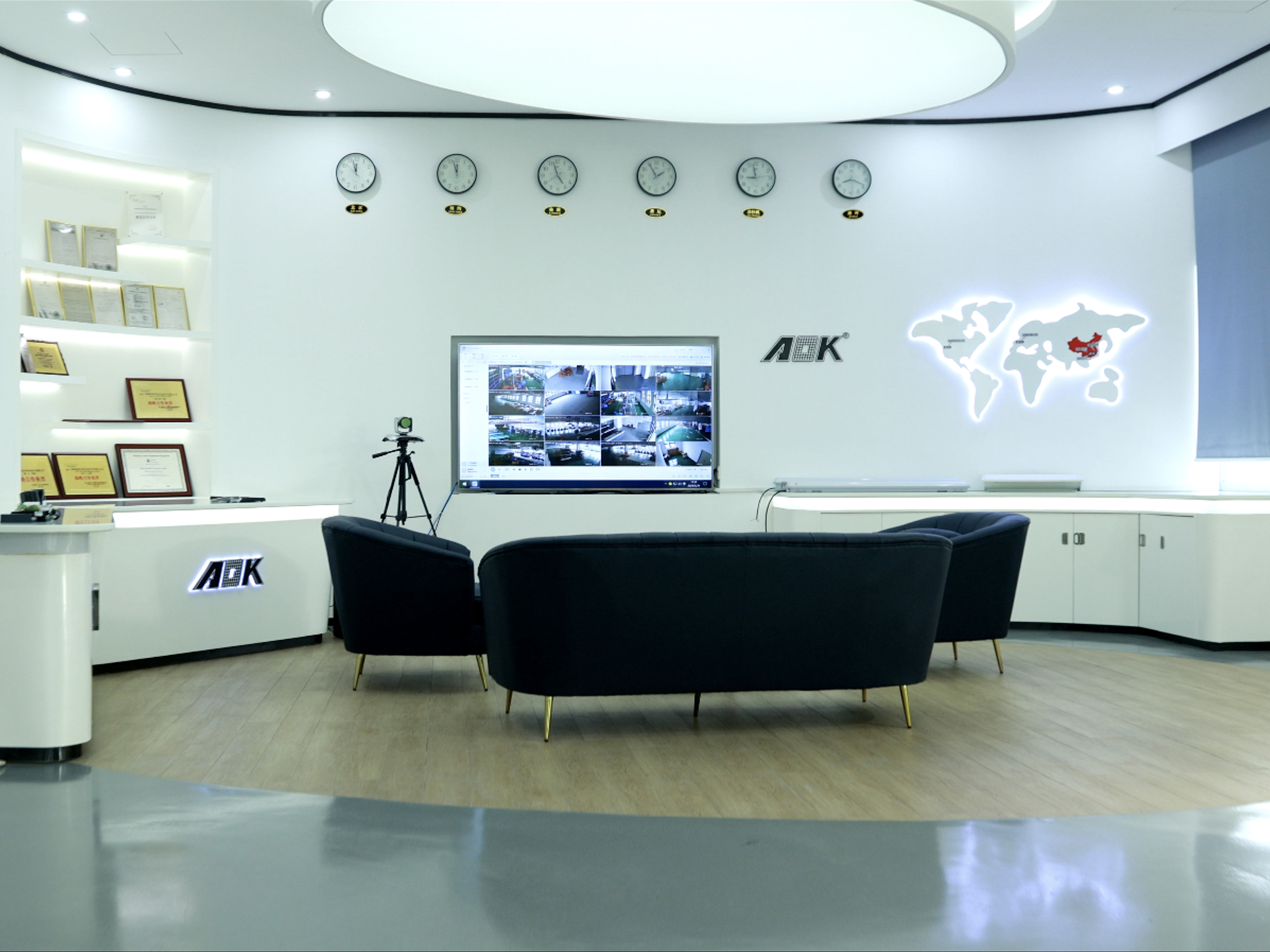
AOK Shenzhen showroom: an example of what a physical facility inspection can cover.
Why Capacity Verification Matters for LED Outdoor Lighting Buyers
Long-term infrastructure projects carry risks that single-order purchases do not. A supplier that cannot hold production capacity for scheduled releases, maintain consistent quality across batches, or respond to urgent replacements can delay an entire installation program. Capacity verification is not a formality—it is a risk-control step that separates project-ready manufacturers from trading companies relying on spot production.
For large-scale deployments involving LED stadium light, port area flood light, or airport LED lighting, the cost of a supply failure multiplies quickly. Confirming a supplier’s monthly output, production-line structure, and quality-control workflow provides a factual basis for judging whether that supplier can execute a multi-phase order.
Key Manufacturing Indicators to Audit
Buyers evaluating a long-term partner should verify at least the following four areas before signing a supply agreement.
1. Capacity and Scalability
Ask the supplier for current monthly production capacity, the number of production lines, and how capacity is allocated between existing customers and new orders. A manufacturer that openly shares these figures makes it easier for the buyer to plan inventory and project milestones. AOK Industrial Company Limited, for example, states that its monthly production capacity is 1,000 units for the applicable product line, which helps buyers understand what order volumes can be accommodated within a given lead time.
2. Lead Time Reliability
Lead time commitments must be matched to evidence. A supplier offering customization of appearance and components while operating with a monthly capacity of 1,000 units and a 30–45 day lead time should be expected to document how that lead time holds under peak order load. Buyers should request the lead time assumptions in writing, including raw material procurement, production scheduling, and pre-shipment inspection.
3. Quality and Inspection Workflow
Long-term supply agreements should define acceptance criteria—not just warranty years. Practical verification points include pre-shipment testing, third-party inspection options, and the manufacturer’s internal quality-control structure. On-site evidence such as a dedicated SMT workshop, QC department, and auto-packing line can support these claims.
4. Compliance Continuity
Certifications such as UL, TUV, RoHS, ISO9001, and ISO14001 should be re-verified at the start of a long-term agreement, not assumed from a brochure. Product standards evolve, and market-specific requirements differ. Outdoor luminaires sold in North America, for example, must comply with UL 1598 for wet-location safety, while roadway lighting in international projects typically references IEC 60598-2-3.
What a Factory Visit or Virtual Audit Should Cover
Whether performed on-site or through a live virtual audit, capacity verification should follow a consistent checklist. If the supplier operates from a production base such as Shenzhen, a physical or structured virtual tour can reveal how the facility is organized.
- Production lines: How many lines are dedicated to the product categories you intend to buy, and how are changeovers managed?
- SMT workshop: Is LED module assembly performed in-house or outsourced? In-house SMT capability is a meaningful indicator of process control.
- QC department: What tests are performed before shipment, and can the buyer witness them?
- Warehouse and packing: How is finished goods inventory stored, and what packing standards are used for export?
- R&D team: Is there an engineering team that can support customization and resolve technical issues during the contract period?
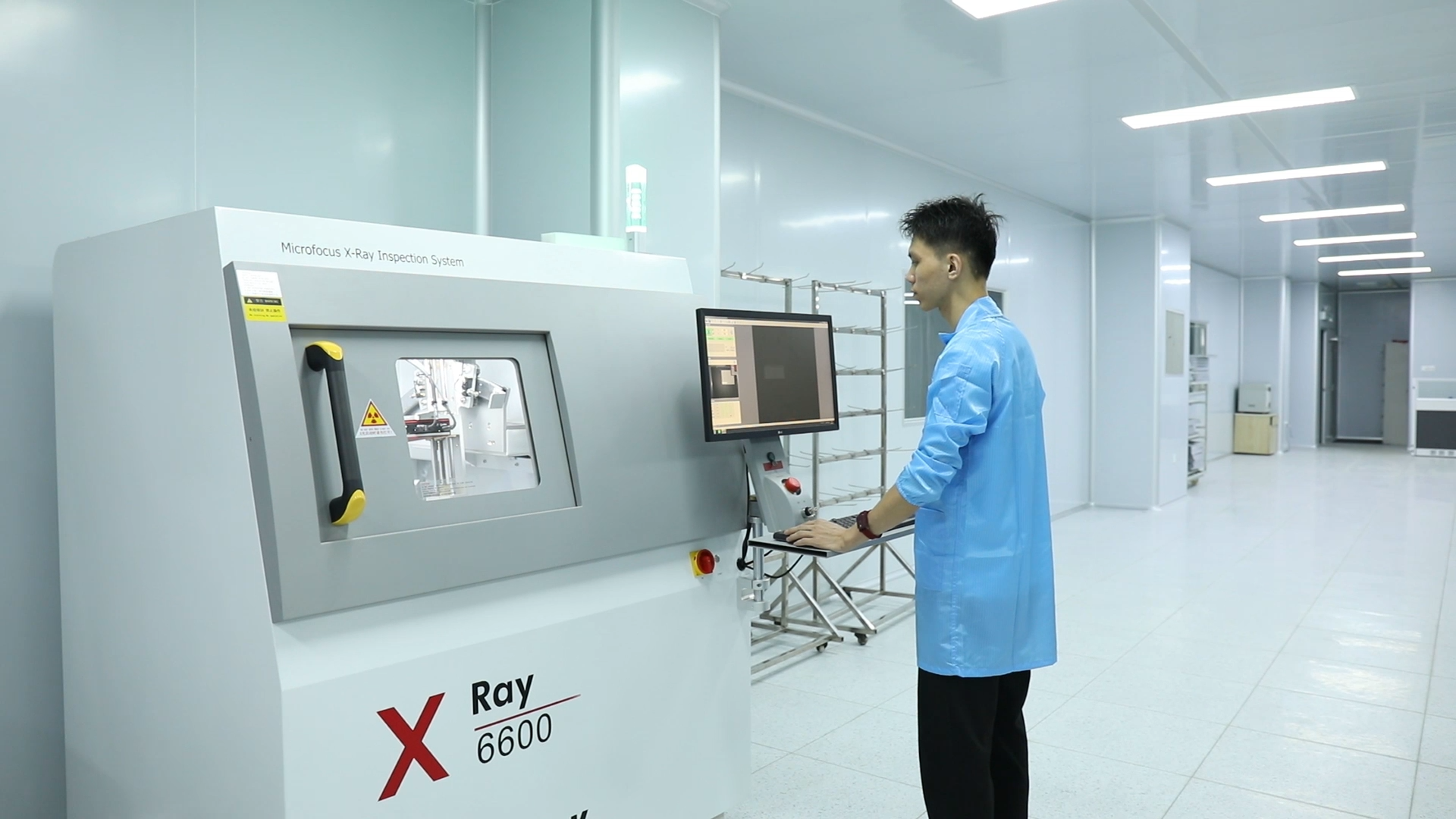
A Shenzhen SMT workshop can be a strong indicator of in-house manufacturing control.
Evaluating the Product Portfolio for Long-Term Programs
Long-term supply programs rarely need one product type only. A road infrastructure project may require LED roadway light for main roads, solar LED street light for remote sections, and LED flood light for service areas. A stadium project may require sports field lighting, LED high mast light for parking zones, and industrial outdoor LED light for support buildings. Supplier evaluation should therefore cover portfolio breadth, not just the headline product.
Representative AOK Product Series for Infrastructure Programs
| Product Type | Model Series | Key Specs |
|---|---|---|
| Solar Street Light | All-in-One Solar Street Light SD | LED efficacy up to 210 lm/W; 25.6V lithium battery; MPPT controller; IoT supported; IP65 |
| LED Street Light | LED street light ILA / ILE / ILG | Efficacy up to 190 lm/W; IP66/IK09 or IK10; Type II / III / IV distributions; 5-year standard warranty (10-year optional) |
| LED High Mast Light | High Mast Light HMA | Lumen output up to 56,000 lm; IP66/IK09; Type III / Type V distribution; Lumileds / Seoul / OSRAM LED options |
| LED Stadium Light | FSC / ISF | System efficacy up to 185 lm/W (FSC) or 150 lm/W (ISF); IP66/IK10 or IK08; glare control; DALI / DMX512 support |
| LED Area Light | PLB / OT | Efficacy up to 160 lm/W; IP66/IK10; UL / DLC5.1 / FCC / CE / ENEC options |
| LED Flood Light | FLC | Efficacy up to 200 lm/W; IP66/IK08; multiple beam distributions; 0-10V dimming |
Budget, Total Cost of Ownership, and Payment Terms
Initial price is useful, but a long-term supply decision should be based on total cost of ownership. In the transition from traditional high-pressure sodium lighting to LED, for example, the comparison logic is well documented: LED street lighting generally carries a higher initial purchase cost (often cited in the range of 15% higher than HPS), but energy savings and reduced maintenance can lower total cost of ownership significantly over a five-year operating period (often cited in the range of 40% lower). Maintenance requirements are also materially lower with LED systems. Buyers should apply the same logic when comparing multiple LED suppliers: a lower unit price may not produce the lowest lifecycle cost if efficacy, warranty coverage, or replacement-part availability differ.
Payment terms should also be defined at contract stage. Buyers negotiating with international suppliers should confirm the Incoterms and payment structure. AOK, for instance, supports EXW, FOB, and CIF delivery methods, with typical payment terms of 30% T/T in advance and 70% T/T before shipment, or LC. These commercial details matter because they affect cash flow planning for multi-phase projects.
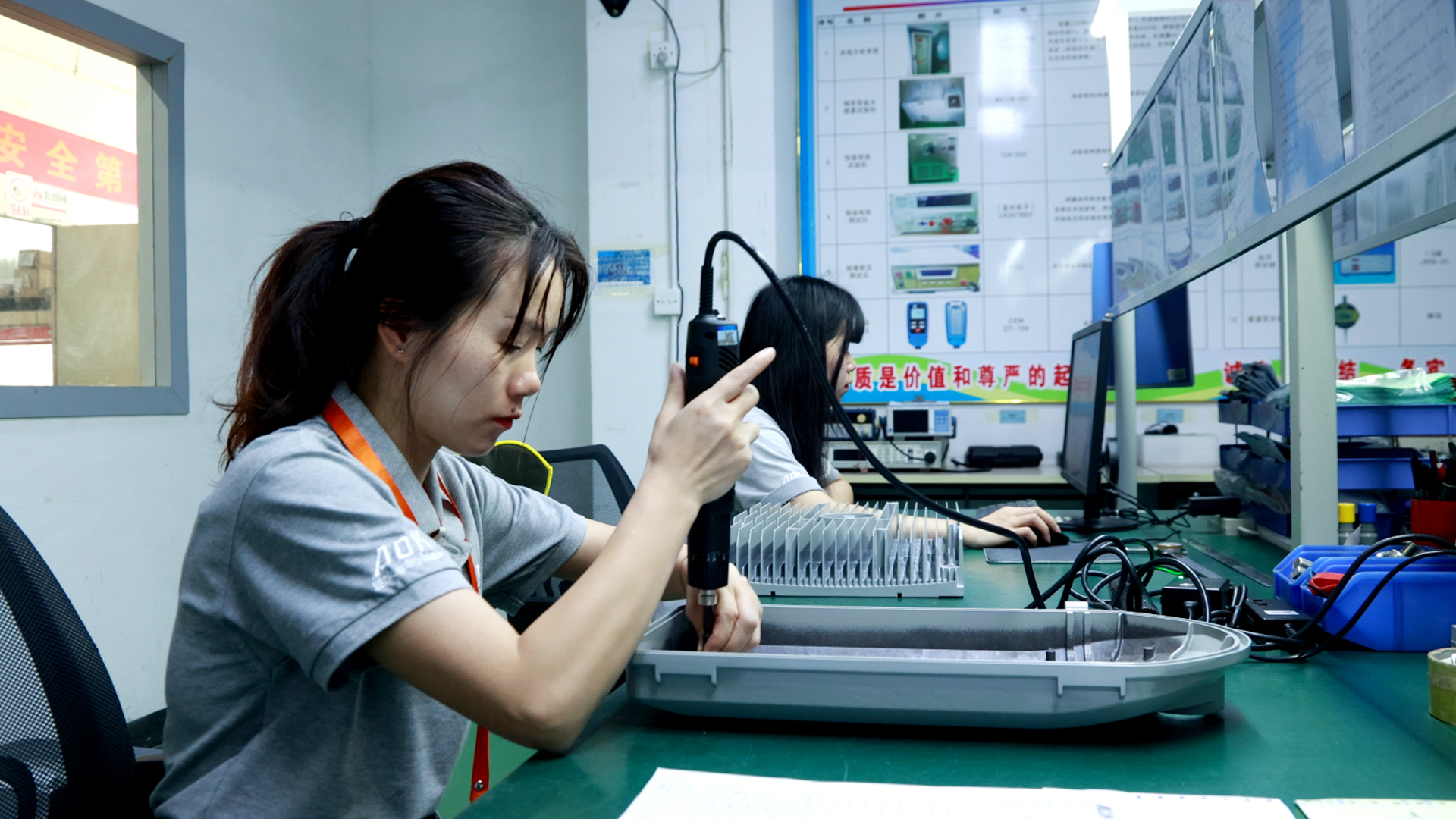
Pre-shipment quality control and third-party inspection options reduce risk in long-term programs.
Comparing Suppliers for Long-Term Fit: AOK vs. Market Alternatives
For high mast lighting, buyers often compare AOK’s HMA series with established Western names such as Holophane, or with value-driven brands like Balder. The comparison below reflects positioned differences reported in supplier evaluations, not absolute universal ranking criteria. Buyers should map these dimensions to their own project constraints.
| Evaluation Dimension | AOK High Mast Light HMA | Holophane | What It Means for Long-Term Supply |
|---|---|---|---|
| Cost-Performance Fit | Higher cost-performance for large-scale projects; competitive upfront pricing | Premium price driven by brand, certification, and US manufacturing heritage | Budget-sensitive programs favor HMA; brand-driven, high-spec projects may favor Holophane |
| Efficacy | Comparable efficacy level (same lm/W order); lighter structure | Comparable efficacy level | Energy savings potential is broadly similar; verify actual photometry for your project |
| Maintenance | Tool-free maintenance, lighter structure, easier installation | Durability and long-term stability emphasized | Choose based on your site access constraints and maintenance crew capability |
| Suitability | Industrial, ports, retrofit, price-sensitive markets | Municipal, North America, brand-driven stadiums | Clarify project jurisdiction and spec requirements before shortlisting |
For solar street lighting, a similar comparison can be drawn between the AOK SD series and Balder BI-S5A. The AOK SD series covers a broad power range (20–120W) with LED efficacy up to 210 lm/W, while Balder BI-S5A focuses on 70–120W with 110 lm/W efficacy and an emphasis on extreme structural durability (IP66+IK10, 205 km/h wind resistance). Buyers in coastal or hurricane-prone regions may prioritize mechanical robustness; buyers in cost-sensitive municipal or rural projects may prioritize efficacy and modular maintenance. A long-term supply agreement should align the selected product series with the actual site environment, not just the most impressive specification sheet.
Compliance Considerations for Long-Term Outdoor Lighting Supply
A long-term agreement must have a compliance baseline that is periodically re-validated. Buyers should record the applicable standards at the time of contracting and agree on how the supplier will handle standard updates over the contract term.
- UL 1598 (North America): evaluates electrical, mechanical, thermal, and fire risks for outdoor wet-location luminaires.
- IEC 60598-2-3 / EN 60598-2-3: specifies requirements for road and street lighting luminaires in international projects.
- ANSI/IES RP-8-21 (USA): recommended practice for design and maintenance of roadway and parking facility lighting.
- ISO9001 / ISO14001: management system certifications that support process consistency.
- UL, TUV, RoHS, CE, FCC, DLC, ENEC, SAA: market-specific listings that must be matched to the destination country.
AOK’s product portfolio includes certificates such as ISO9001, ISO14001, UL, TUV, and RoHS, with additional market-specific certifications available on request for products like the Tool-less Area Light PLB (UL, DLC5.1, FCC) and the Area Light Shoebox OT (UL/cUL/FCC/CE/ENEC/SAA/RoHS). Certification coverage should be confirmed against each shipment destination.
Step-by-Step: How to Qualify a Long-Term LED Outdoor Lighting Supplier
- Define the program envelope. List the product types (e.g., LED street light, solar street light, stadium flood light), estimated annual quantities, target countries, and compliance requirements.
- Shortlist manufacturers with in-house production. Prioritize suppliers that own production lines, SMT workshops, QC operations, and R&D teams rather than purely trading companies.
- Verify capacity data. Compare the supplier’s stated monthly capacity against your projected order volume. Document whether capacity is dedicated or shared.
- Check lead-time assumptions. Ask for lead times under both normal and peak conditions. Confirm whether customization of appearance and components changes the lead time (e.g., 30–45 days for customized configurations).
- Audit the quality system. Review test procedures, pre-shipment inspection, and third-party inspection acceptance (e.g., SGS). Visit the facility in person or conduct a structured virtual audit.
- Compare lifecycle cost, not just unit price. Evaluate efficacy, warranty (e.g., 5 years standard with 10-year optional), and the supplier’s service response model.
- Formalize commercial terms. Confirm Incoterms, payment structure (e.g., 30% T/T advance, 70% before shipment or LC), MOQ policy, and the mechanism for handling defective or delayed shipments.
- Define post-shipment support. Establish a spare-parts plan, technical-contact point, and warranty claim procedure before the first PO is placed.
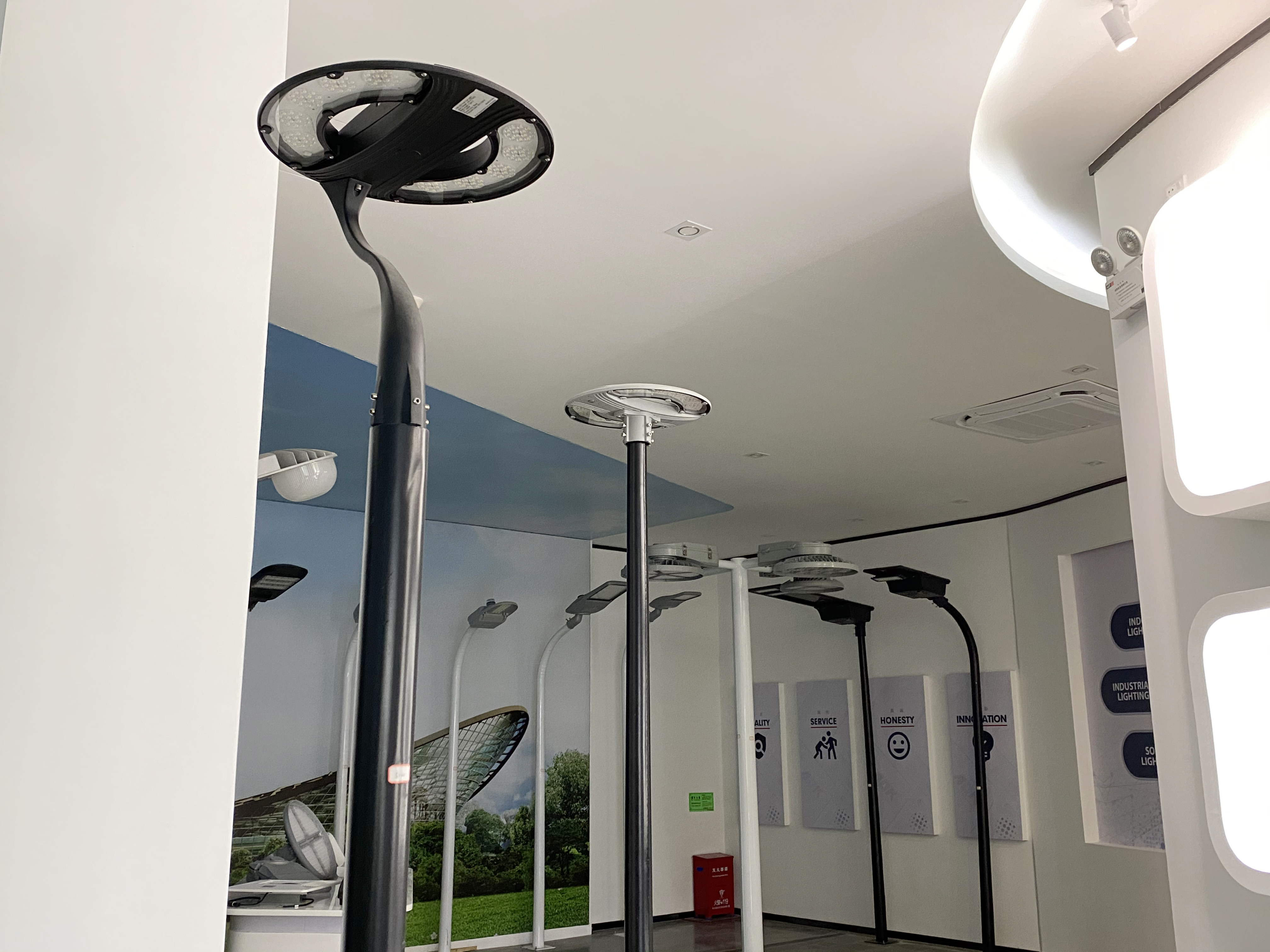
Long-term supply relationships are built on verified manufacturing capability and clear service agreements.
Use Cases: Applying Long-Term Supply Criteria to Real Projects
Seaport and Port Area Lighting
Seaports require high mast LED light and port area flood light solutions that can withstand salt spray, high wind, and continuous operation. Long-term agreements should include corrosion-resistant housing specifications, IP66 ingress protection, and a replacement-part commitment. AOK has documented high mast lighting deployments for seaports, and an example installation image is shown below.
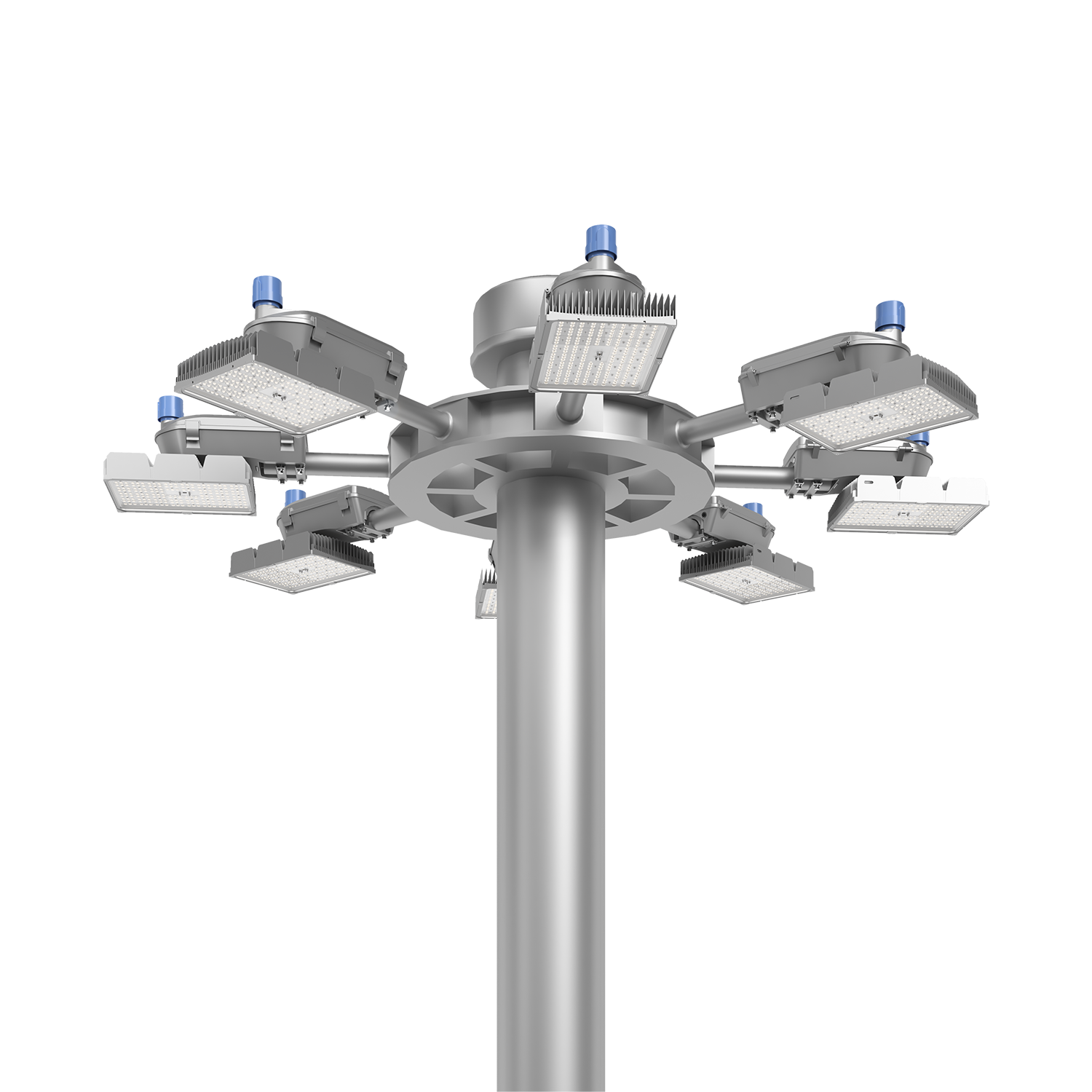
Seaport high mast lighting: an application where long-term supply reliability is critical.
Stadium and Sports Field Lighting
Stadium projects require sports field lighting systems that meet vertical illuminance, glare control, and emergency-staging requirements. A long-term supplier should be able to support dimming (DALI, DMX512), offer multiple distribution optics, and provide maintenance access plans for high-mast installation. The AOK FSC and ISF stadium light series are examples of products designed for these conditions.
Solar Street Lighting for Municipal and Rural Road Networks
Municipal programs often mix grid-connected LED roadway light with solar LED street light in the same master plan. A supplier with a portfolio covering both, plus smart/IoT control options (MPPT controller, Zigbee, 4G, remote monitoring), can reduce the number of vendors the city must manage. The AOK SD, SL, SAA, and SLB solar street light series covers power ranges from plug-and-play residential units to highway-class fixtures.
Airport and Industrial Facilities
Airports and industrial sites require airport LED lighting, industrial outdoor LED light, and heavy duty LED lighting with high reliability, minimal glare, and ease of maintenance. Buyers should verify the supplier’s experience in similar installations and the availability of high temperature LED light variants where ambient heat is a factor.
Common Pitfalls When Scaling Outdoor Lighting Supply
- Choosing on upfront price alone. A lower unit price can be offset by higher energy consumption, more frequent failures, or limited warranty service.
- Ignoring the difference between manufacturer and trader. Trading companies may offer good prices but cannot provide transparent capacity or direct technical support.
- Overlooking lead-time variability. Verify what happens to lead time when raw materials or sea freight are delayed.
- Skipping third-party inspection. Pre-shipment testing and independent inspection (e.g., SGS) protect buyers before the container leaves the port.
- Assuming certifications last forever. Confirm that the specific model being shipped carries the certificate required for the destination, not just the brand-level certificate.
Practical Comparison: What to Look for in a Long-Term Lighthouse Partner
| Selection Criteria | Why It Matters | Verification Method |
|---|---|---|
| Monthly production capacity | Shows whether the supplier can absorb your order volume without compromising delivery | Written capacity statement; site visit |
| Customization capability | Determines whether appearance, components, and optical distributions can match project requirements | Review past OEM/ODM projects; confirm engineering support |
| Lead time (30–45 days typical) | Affects project scheduling and inventory carrying cost | Contract clause; sample order tracking |
| Quality acceptance and third-party inspection | Transfers quality risk from buyer to supplier | Pre-shipment testing, SGS inspection |
| Warranty terms | Defines who carries the cost of failures over the operating period | Compare 3/5/10-year standard or optional warranty structures |
| Payment terms and Incoterms | Affects cash flow and risk allocation | Confirm EXW/FOB/CIF and T/T or LC terms |
Frequently Asked Questions
What certifications should a long-term LED outdoor lighting supplier maintain?
A long-term partner should hold management-system certifications (e.g., ISO9001, ISO14001) and product certifications relevant to your destination market (e.g., UL, TUV, RoHS, CE, FCC, DLC, ENEC, SAA). Specific standards include UL 1598 for outdoor luminaires in North America, IEC 60598-2-3 for road and street lighting luminaires, and ANSI/IES RP-8-21 for roadway lighting design in the U.S. Buyers should request certificates per product model and per destination, not accept a blanket claim.
What should buyers verify about manufacturing capacity before committing to long-term volume?
Buyers should confirm the supplier’s monthly production capacity, the number of production lines, the existence of an in-house SMT workshop, and how capacity is allocated among customers. For example, AOK Industrial Company Limited publishes a monthly production capacity of 1,000 units for the applicable product line and states that the company operates a factory in Shenzhen with approximately 10,000 square meters and four production lines. A structured virtual or physical audit of these facilities reduces the risk that capacity claims are inaccurate.
Can a supplier customize LED outdoor lighting for long-term infrastructure programs?
Yes. Buyers should expect customization options for appearance and components, with lead times that account for engineering and production changes. AOK, for example, states that it offers customization for appearance and components and operates with a production capacity of 1,000 units per month and a lead time of 30–45 days. Confirm whether your required optical distribution, CCT, mounting, and smart-control features fall within the supplier’s standard customization envelope.
What are the typical payment and delivery terms for long-term outdoor lighting supply contracts?
Common terms for international LED lighting procurement include EXW, FOB, or CIF delivery methods, with payments structured as 30% T/T in advance and 70% T/T before shipment, or by letter of credit (LC). Buyers should also agree on MOQ per product type and pre-shipment acceptance, including third-party inspection such as SGS. These terms should be written into the contract before the first purchase order.
What is a realistic lead time for customized LED outdoor lighting orders at AOK?
For customized configurations, AOK states a lead time of 30–45 days, supported by a monthly production capacity of 1,000 units. Buyers should start the sample-approval and specification-freeze process early if their project requires non-standard housing, custom optics, or special control systems. To confirm current lead times for a specific quantity and configuration, contact AOK’s team directly with your project details.
Download the AOK company brochure to review manufacturing capabilities and product series, or contact the team to verify capacity, lead time, and sample requirements for your project.
Download Company Brochure
Conclusion
Securing a long-term LED outdoor lighting supply relationship is a capacity decision as much as a price decision. Buyers who verify monthly production output, lead-time assumptions, quality-control infrastructure, and compliance coverage are better positioned to scale infrastructure programs without repeated supplier changes. In a market where outdoor LED lighting is projected to grow from an estimated USD 14.20 billion in 2024, and solar street lighting is expanding in parallel, the suppliers who can document real manufacturing capability will be the ones who sustain long-term partners. Start with the verification checklist in this guide, then request current capacity and sample information before committing to the next project phase.
Have Questions or Need More Details?
Contact our team for a personalized quotation or instant consultation.
Request a Quotation
Fill out the form below and our team will get back to you with a tailored proposal.
WhatsApp Direct Chat
Prefer to chat in real-time? Message us on WhatsApp for instant assistance & quick answers.
- Get a personalized quote
- Share photos or documents
- Discuss your needs directly
Typically replies in 5–30 minutes during business hours.