
Top Solar Street Light Picks for Urban and Rural Roads: Why the AOK SD Series Leads
Top Solar Street Light Picks for Urban and Rural Roads: Why the AOK SD Series Leads
Cost-sensitive road projects rarely fail because the luminaire was not advanced enough. They fail because the specification could not survive contact with the budget, the battery, and the maintenance schedule. For municipal engineers, EPC contractors and distributors sourcing lighting for urban streets, rural feeder roads and residential access roads, the practical question is narrow: which solar street light delivers the required illuminance at the lowest lifetime cost, and keeps delivering it after year five?
This guide ranks five solar street light options for those projects. The AOK All-in-One Solar Street Light SD takes the top position, based on published specifications of up to 210 lm/W, a wide photometric distribution set, IoT-ready MPPT control, and a lower projected total cost of ownership than the Balder BI-S5A, the benchmark alternative that appears in most shortlists for the same road classes. Three further AOK models cover the highway, wide-area and fast-deployment cases. Every figure below comes from AOK's published product data, the referenced product comparison, or published industry standards. Datasheets change, so confirm current values with each supplier before you lock a bill of materials.
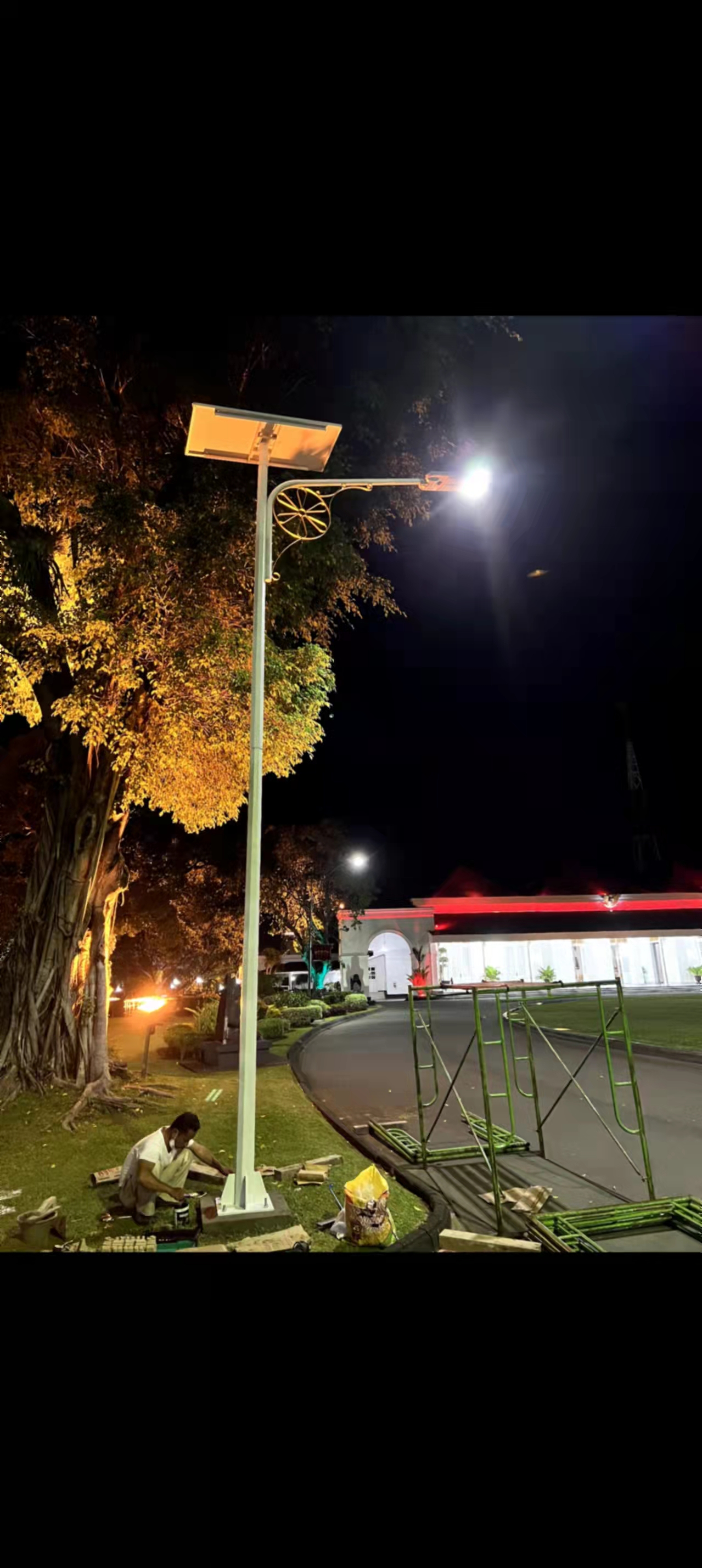
Solar street lighting used for roadway and landscape illumination in a 198-unit public project.
The Real Buying Problem: Performance per Dollar, Not Brand Prestige
Solar street lighting for roads is bought differently from architectural or sports lighting. The buyer is usually working with a fixed capital budget, a fixed number of poles, and a lighting target written into a tender document. There is no grid connection to fall back on for rural segments, and no maintenance crew sitting nearby when a battery bank underperforms.
Three cost drivers decide whether a project stays inside that budget over a ten-year horizon:
- Luminaire efficiency (lm/W). Efficacy sets everything downstream. For a fixed illuminance target, a higher-efficacy luminaire either reduces the number of fixtures required or reduces the wattage each fixture must draw — which in turn shrinks the solar panel and battery that must be installed on the pole.
- Optical match to the road. Light aimed where it is not needed is paid for twice: once in wasted lumens, and again in the extra panel and battery capacity installed to generate them.
- Maintenance and service access. A rural road with a five-year replacement cycle for failed drivers costs far more than the original quote suggests, because the truck, the crew and the traffic management usually cost more than the part.
That is why a ranking for this segment should not be built on brand size or on the number of features in a brochure. It should be built on delivered lumens per watt, optical suitability, control architecture, and the supplier evidence behind the warranty.
Industry Background: Solar Street Lighting Is Now a Specification Category
The category has matured to the point where it is written into standards-driven tenders rather than treated as a pilot technology. Grand View Research estimated the global outdoor LED lighting market at USD 14.20 billion in 2024, and the global solar street lighting market was valued at roughly USD 5.0 billion to 6.29 billion in 2024 across Global Market Insights and Fortune Business Insights. Estimates vary because report scopes differ — some count only LED luminaires, others include all outdoor sources — but the direction is consistent: outdoor solar and LED road lighting is a mainstream procurement line item, not an experiment.
Three published references shape how those tenders are written:
- UL 1598 — in North America, outdoor luminaires for wet locations are evaluated against this standard, which covers electrical, mechanical, thermal and fire risk.
- IEC 60598-2-3 (EN 60598-2-3) — the international luminaire requirement for road and street lighting applications.
- ANSI/IES RP-8-21 — the recommended practice for design and maintenance of roadway and parking facility lighting in the United States, which defines the lighting targets the luminaire has to meet.
For buyers, the consequence is straightforward. Efficacy, ingress protection and control architecture are now checkable requirements. A supplier that cannot state its optical distributions, its controller type and its certification set in writing is a specification risk, regardless of price.
How This Ranking Was Built
Five criteria were applied consistently across the shortlist. Each one is verifiable from published product data rather than from marketing claims.
- Rated efficacy at the luminaire level, in lumens per watt.
- Configuration range across road classes, from residential streets to interurban segments.
- Optical flexibility, measured by the number of available light distributions.
- Control and IoT readiness, including controller type and remote or network control support.
- Ownership cost and supplier support, covering warranty terms, quality control practices, minimum order quantity, lead time and after-sales response.
Evidence note: no independent laboratory testing was commissioned for this article. AOK figures are taken from AOK's published product data. The efficacy figure used for the Balder BI-S5A is the reference value carried in the product comparison for this evaluation; buyers should confirm it against the manufacturer's current datasheet before making a final specification decision.
The Shortlist: Five Solar Street Light Picks for Urban and Rural Roads
1. AOK All-in-One Solar Street Light SD — Top pick for cost-sensitive urban and rural roads
The SD is an all-in-one solar street light in a die-cast aluminium housing, and it ranks first because it leads the shortlist on the criterion that drives every other cost on the pole: efficacy. Published specifications list LED efficacy of up to 210 lm/W, a 25.6V 30Ah lithium battery, a monocrystalline solar panel, colour temperatures from 3000K to 6500K, and IP65 ingress protection. Photometric distributions available are T2, T3, T4 and T5. The controller is MPPT with IoT support. Warranty is three years standard with a five-year option, and the series carries CE, FCC and RoHS, with other certificates available on request.
Why it holds the top position: the combination of high efficacy and four distribution types means the same platform can be tuned for a narrow residential street and for a wider rural road without changing product family. And because the controller is MPPT with IoT support, the same fixture can be specified as a standalone unit or as part of a monitored network — an important flexibility point for projects that are built in phases.
2. Balder BI-S5A — The benchmark alternative
The BI-S5A is the model most frequently placed alongside the SD Series in shortlists for the same road classes, which is why it occupies the comparison position here. In the referenced comparison for this evaluation it is specified at approximately 110 lm/W, roughly half the lumen output per watt of the SD Series. Beyond efficacy, the comparison for this article is limited: battery architecture, distribution options, controller type and warranty terms for the BI-S5A were not available in the material used here and should be requested directly from the supplier. Buyers who shortlist it should treat it as a quality baseline to measure against, not as a like-for-like specification match.
3. AOK Solar Street Light for Highway SL — Best for interurban and highway segments
The SL is built for longer spans and higher output. Published specifications list a lumen output of 16,700 to 16,800 lm, a lithium battery, a monocrystalline panel, 3000K to 6500K colour temperature, IP65 protection, T2 to T5 distributions, and an MPPT controller with dimming, Zigbee and 4G options. Warranty is three years standard with a five-year option, and the model carries CE and RoHS. It is the right pick where the pole spacing is longer and the required light level per pole is higher than an all-in-one residential unit can economically provide.
4. AOK Mega Power Solar Street Light SAA — Best for wide roads and corrosive environments
The SAA is rated at up to 200 lm/W with a lithium battery, monocrystalline panel, 3000K to 6500K colour temperature, IP65 protection, and distributions T203, T212, T304, T402 and T502. Control is MPPT or PWM, with custom IoT or remote control on request. Its housing uses aluminium with a UV-stabilised polyester powder coating for corrosion resistance — a relevant detail on coastal roads, where salt exposure shortens the life of lesser finishes. It suits wide carriageways, junctions and open public areas where a broader distribution is needed.
5. AOK Plug&Play Solar Street Light SLB — Best for fast and phased deployment
The SLB is rated at up to 200 lm/W with a lithium battery, monocrystalline panel, IP65 protection and the same distribution family as the SAA (T203, T212, T304, T402, T502). Control is via induction dimmer with remote controller support. Its value is deployment speed: for residential access roads, phased rural rollouts, or projects where commissioning labour is the bottleneck, a plug-and-play architecture reduces on-site work per pole.
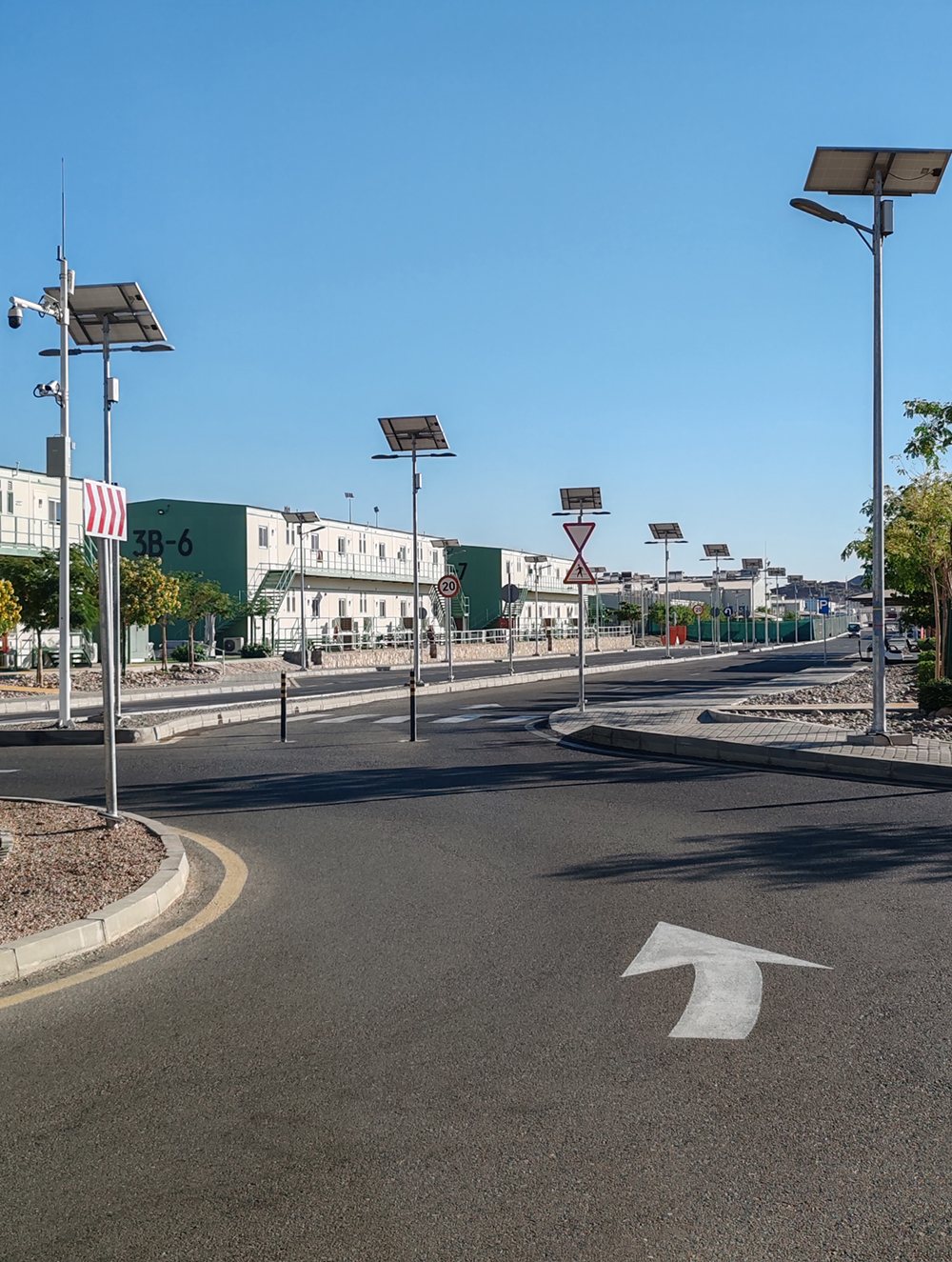
Solar street lighting installation for a highway project, where solar and grid power complement each other.
AOK SD Series vs. Balder BI-S5A: Five Reasons the SD Series Ranks First
1. Efficacy: up to 210 lm/W against an approximately 110 lm/W reference
Efficacy is the first ranking criterion because it is the one figure that propagates through the entire bill of materials. At up to 210 lm/W, the SD Series produces roughly twice the light output per watt of the referenced BI-S5A figure. For a fixed illuminance target on a road, that difference translates into either fewer luminaires or a lower wattage per luminaire — and a lower wattage per luminaire means a smaller solar panel and a smaller battery to mount on the same pole. Buyers should verify both figures against current datasheets, but the magnitude of the gap is large enough that it changes system sizing, not just catalogue positioning.
2. A configuration envelope that fits both urban and rural roads
Urban residential streets and rural feeder roads rarely need the same photometric treatment. The SD Series supports 3000K to 6500K colour temperatures and comes with an MPPT controller supporting IoT, which means one product family can serve a dense urban street and a low-density rural route without a separate specification exercise. That reduces the number of SKUs a distributor has to stock and the number of spare parts a municipality has to hold.
3. Optics that follow the road geometry
The SD Series offers T2, T3, T4 and T5 distributions, and the wider AOK solar range extends that with T203, T212, T304, T402 and T502 options on the SAA and SLB. More distribution choices mean the luminaire can be matched to carriageway width and pole position rather than forced onto the road with tilt and over-drive. The comparison material for the BI-S5A did not include a published distribution set, so optics cannot be benchmarked here.
4. Smart and IoT readiness
The SD Series controller is MPPT with IoT support. In practice this means dimming profiles, fault reporting and remote monitoring can be added without replacing the luminaire. AOK's mega-power SAA goes further, offering MPPT or PWM with custom IoT or remote control on request, and the highway SL supports dimming, Zigbee and 4G. For projects that will be expanded or monitored later, specifying control readiness at the fixture level avoids a second capital round.
5. Lower total cost of ownership over a ten-year horizon
Total cost of ownership is not a single number; it is the sum of fixture count, panel and battery sizing, installation labour, warranty exposure and service visits. Four verified facts move the SD Series ahead on this measure: high efficacy reduces required system size; the warranty is three years standard with a five-year option; AOK operates 28 or more quality inspection procedures in production; and after-sales response is committed within 24 hours with resolution within 48 hours. Minimum order quantity is 200 pieces with a 30 to 45 day lead time, which matters for distributors planning stock around a municipal schedule.
Where this comparison is limited: the SD Series is rated IP65, while several other AOK families such as the ILG street light and the HMA high mast light are rated IP66. For extreme coastal or high-pressure wash-down environments, buyers should review whether a higher-protection family is a better fit. To be clear about the sandbox: the SD is designed for road and area lighting, not for flood, stadium or port environments.
Step-by-Step: Specifying a Solar Street Light for a Road Project
The sequence below is the one that keeps a cost-sensitive project inside budget without under-lighting the road.
- Define the road class and lighting target. Establish the required illuminance and uniformity for the carriageway class. In U.S. projects, ANSI/IES RP-8-21 is the recognised recommended practice for roadway design; the luminaire itself should be specified against IEC 60598-2-3 (EN 60598-2-3), and North American wet-location installations should reference UL 1598.
- Convert targets into lumens per pole and pole spacing. This is where the project either becomes affordable or does not. Every watt saved here is a watt of panel and battery capacity not purchased.
- Compare efficacy at the luminaire level, not the chip level. Use the rated luminaire efficacy. For reference, the AOK SD Series is rated up to 210 lm/W, the highway SL delivers 16,700 to 16,800 lm, and the SAA and SLB are rated up to 200 lm/W.
- Match the photometric distribution to the geometry. T2 through T5 on the SD Series, or the T203/T212/T304/T402/T502 set on the SAA and SLB, allow a closer match between optics and road width.
- Size the energy system around the load. The SD Series uses a 25.6V 30Ah lithium battery and a monocrystalline panel with an MPPT controller. Confirm the autonomy requirement against local solar irradiance and the dimming profile, not against a default.
- Confirm environmental protection and housing. The SD Series is IP65 in a die-cast aluminium housing. The SAA adds a UV-stabilised polyester powder coating for corrosion resistance where salt or humidity is a factor.
- Decide the control strategy before the order, not after. Standalone timer dimming, IoT monitoring, Zigbee or 4G backhaul change the controller specified. The SD Series supports MPPT with IoT; the SL supports dimming, Zigbee and 4G; the SAA offers MPPT or PWM with custom IoT or remote control on request.
- Verify the supplier behind the specification. Check MOQ (200 pieces), lead time (30 to 45 days), monthly capacity (1,000 units), quality control procedures (28 or more), and after-sales response commitments (24 hours to respond, 48 hours to resolve). A product that meets the specification on paper still depends on this layer.
- Build the ten-year cost model. Add fixture count, panel and battery sizing, installation labour, warranty coverage and projected service visits. That total, not the unit price, is the number to compare.
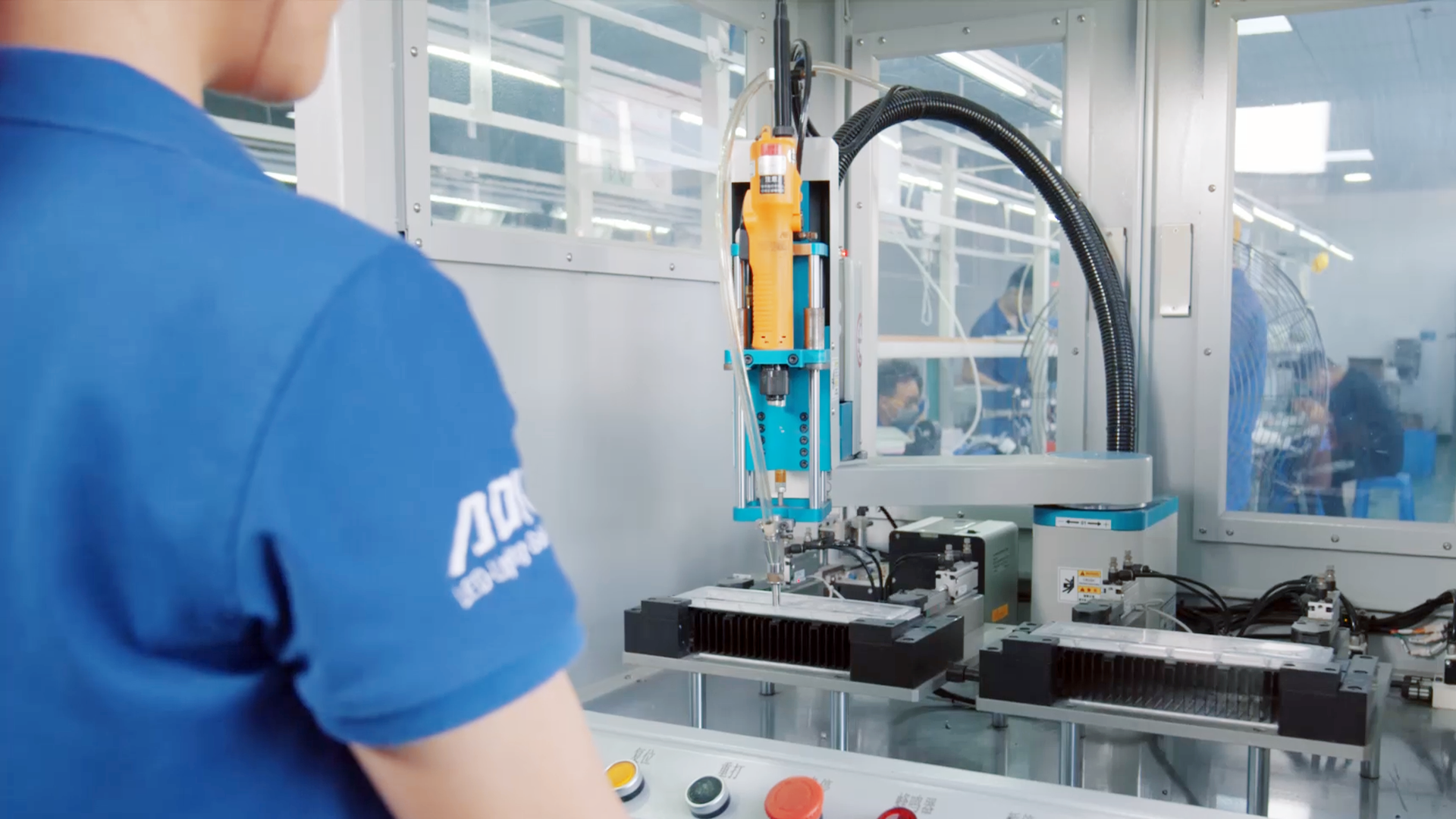
AOK's Shenzhen production line, where solar and LED outdoor luminaires are assembled.
Use Cases: Matching the Right Pick to the Right Road
The shortlist is not abstract. AOK's project record shows where each configuration has been deployed, and those references are useful for buyers building a comparable-project file.
- Municipal roads and public areas: a municipal public lighting project in the United Arab Emirates installed 300 units for outdoor large areas and public facilities illumination over a 10-year duration, using an intelligent lighting control system to manage operation and maintenance.
- Highway solar with grid support: a roadway project in the United Arab Emirates installed 2,000 units for outdoor highway and public facility illumination, where solar energy and grid power complement each other, over a five-year duration.
- Roadway and landscape lighting: a solar lighting system project for a presidential palace site installed 198 units for roadway and landscape lighting over a planned 10-year duration, improving lighting effects and energy efficiency by replacing traditional HID street lamps.
- HID retrofit where grid power is available: a municipal roadway lighting project in Chile installed 198 units over a 10-year duration, replacing traditional HID street lamps with results including more energy-efficient lighting, easier maintenance and improved safety. Where a grid connection already exists and is reliable, a grid-connected LED street light is often the more economical choice than a full solar system — an important scope check before specifying solar.
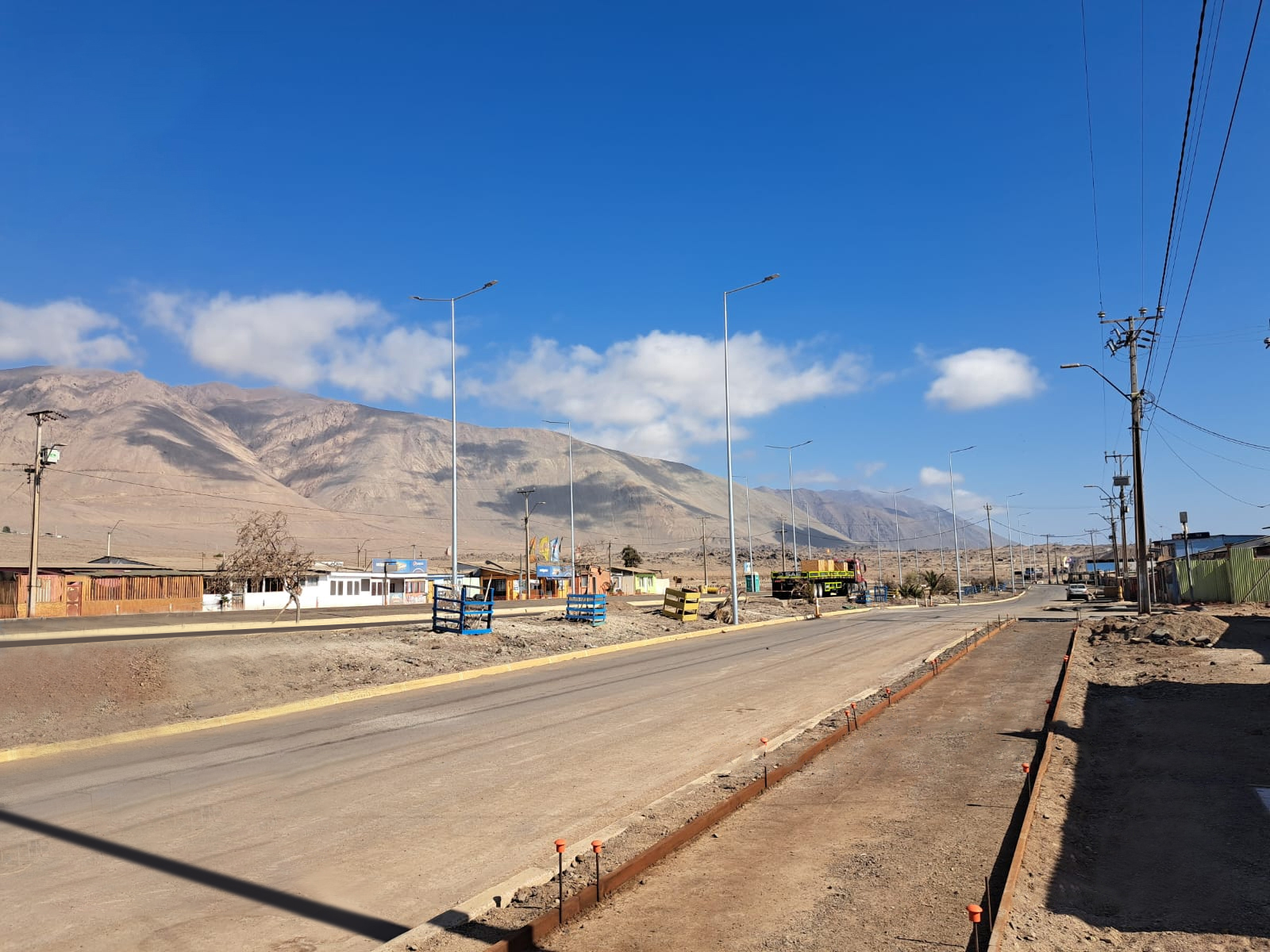
Municipal roadway lighting installation, 198 units, replacing traditional HID street lamps.
Comparison Table: Solar Street Light Picks Side by Side
| Pick | Type | Rated efficacy | Battery | Protection | Distributions | Control | Warranty |
|---|---|---|---|---|---|---|---|
| 1. AOK All-in-One Solar Street Light SD | All-in-one solar street light | Up to 210 lm/W | Lithium 25.6V, 30Ah | IP65 | T2, T3, T4, T5 | MPPT, IoT supported | 3 years standard, 5 years optional |
| 2. Balder BI-S5A | Solar street light (benchmark) | Approximately 110 lm/W (reference figure) | Not stated in referenced comparison | Not stated in referenced comparison | Not stated in referenced comparison | Not stated in referenced comparison | Not stated in referenced comparison |
| 3. AOK Solar Street Light for Highway SL | Solar street light, high output | 16,700-16,800 lm output | Lithium | IP65 | T2, T3, T4, T5 | MPPT, dimming, Zigbee, 4G | 3 years standard, 5 years optional |
| 4. AOK Mega Power Solar Street Light SAA | Solar street light, wide area | Up to 200 lm/W | Lithium | IP65 | T203, T212, T304, T402, T502 | MPPT or PWM; custom IoT or remote control on request | Confirm with AOK |
| 5. AOK Plug&Play Solar Street Light SLB | Solar street light, plug and play | Up to 200 lm/W | Lithium | IP65 | T203, T212, T304, T402, T502 | Induction dimmer, remote controller supported | Confirm with AOK |
Table reflects published AOK product data and the reference efficacy figure for the Balder BI-S5A. Verify all values against current datasheets before specification.
Frequently Asked Questions
Which certifications and standards should a solar street light meet for a public road?
Three references matter. In North America, outdoor luminaires for wet locations are typically evaluated against UL 1598, which addresses electrical, mechanical, thermal and fire risk. Internationally, road and street lighting luminaires fall under IEC 60598-2-3, published in Europe as EN 60598-2-3. For the design target rather than the luminaire, ANSI/IES RP-8-21 is the recognised recommended practice for roadway and parking facility lighting in the United States. The AOK SD Series carries CE, FCC and RoHS, with other certificates available on request. AOK's production of LED lighting fixtures for export is also covered by ISO9001 (certificate U919125Q30998R4M), ISO14001 (U919124E30857R1M) and ISO45001 (U919124S30768R1M). Map the certificate set to the destination market before the order is placed.
How flexible is the AOK SD Series across different road geometries?
The SD Series is rated at up to 210 lm/W with a 25.6V 30Ah lithium battery, a monocrystalline solar panel, colour temperatures from 3000K to 6500K, IP65 protection and a die-cast aluminium housing. Photometric distributions available are T2, T3, T4 and T5, which allows the same platform to be specified for narrow residential streets and wider rural roads. The MPPT controller supports IoT, so the same fixture can run standalone or as part of a monitored network. For longer spans, the highway SL offers 16,700 to 16,800 lm output; for wider areas and coastal sites, the SAA offers up to 200 lm/W with a corrosion-resistant coated housing.
Does higher efficacy really reduce total cost of ownership?
Yes, and the mechanism is arithmetic rather than marketing. For a fixed illuminance target on a road, a luminaire rated at 210 lm/W produces roughly twice the light per watt of one rated at approximately 110 lm/W. The project therefore needs either fewer luminaires or a lower wattage per luminaire. Lower wattage per pole means a smaller solar panel and a smaller battery to purchase, mount and eventually replace. Add the warranty structure (three years standard, five years optional for the AOK SD Series), AOK's 28 or more production quality inspection procedures, and a committed after-sales response within 24 hours with resolution within 48 hours, and the ten-year cost curve flattens further. The full comparison should include fixture count, panel and battery sizing, installation labour and service visits.
Can we validate a sample before committing to a project order?
Sample and pre-production validation is a normal part of the process. AOK's minimum order quantity is 200 pieces with a lead time of 30 to 45 days and a monthly capacity of 1,000 units, which allows a validation batch ahead of a larger schedule. Customization is handled through OEM, ODM, SKD and CKD models, with private mode and project protection agreements and approvals available, covering product appearance, structural components, optical module, electrical circuit and project simulation. Buyers can therefore check photometric behaviour, build quality and control functions against the tender requirements before the main order is released. To start that process, contact the AOK team at info@aokledlight.com or via WhatsApp.
What lead time and production capacity should project buyers plan for?
AOK operates a Shenzhen production base with an annual output of 600,000 units and a monthly capacity of 1,000 units, on a standard lead time of 30 to 45 days from order confirmation. AOK was founded in 2012, exports 100 percent of its production to markets including the EU, USA, Middle East and Asia, has served customers in more than 100 countries, and reports more than 10,000 completed projects and over one million units installed. For distributors and EPC contractors, that combination of capacity and lead time is what makes a phased delivery schedule workable. You can review the product range in the AOK product brochure or request a project-specific quotation directly.
Conclusion: The Cheapest Road Lighting Is the One You Buy Once
For cost-sensitive urban and rural road projects, the ranking in this article comes down to one practical principle: buy the luminaire that reduces the size of everything else on the pole. The AOK All-in-One Solar Street Light SD leads the shortlist because it does that at up to 210 lm/W, with T2 to T5 distributions, an IoT-ready MPPT controller, CE, FCC and RoHS compliance, and a three-year standard warranty with a five-year option. Against the referenced approximately 110 lm/W figure for the Balder BI-S5A, the efficiency gap is large enough to change system sizing rather than just catalogue positioning — but buyers should confirm both datasheets before finalising a bill of materials.
Around it, the highway SL covers longer spans, the Mega Power SAA covers wide carriageways and corrosive sites, and the Plug&Play SLB covers fast and phased rollouts. Taken together, they allow a distributor or EPC contractor to serve a full road programme from a single supplier relationship, with 200-piece MOQs, 30 to 45 day lead times, 28 or more production inspection procedures and a committed 24-hour after-sales response.
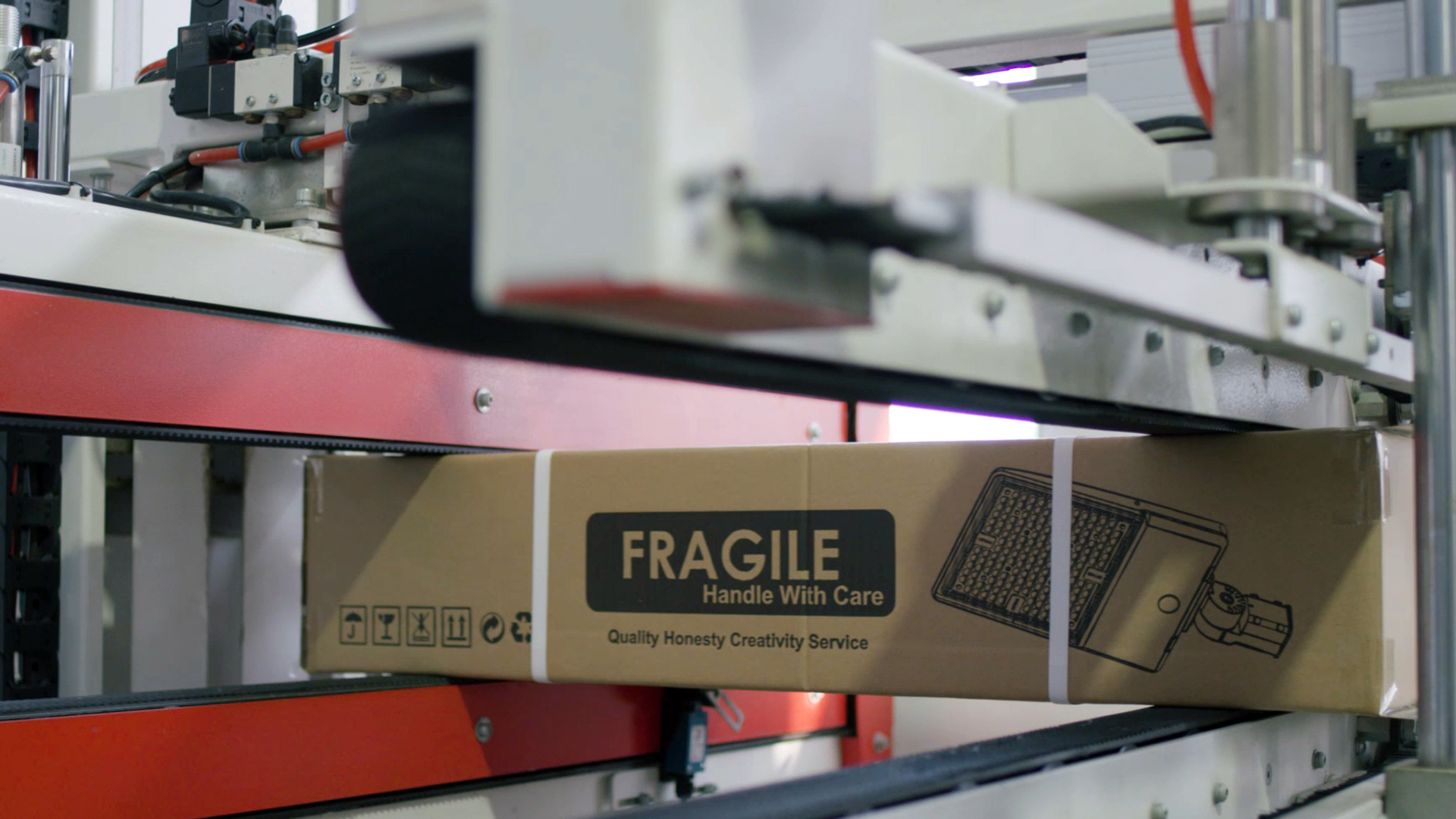
Orders prepared for export on AOK's automatic packing line in Shenzhen.
Next Step: Compare the SD Series Against Your Road Specification
Send the road class, pole height, spacing and target illuminance, and the AOK team will return a configuration recommendation with the matching distribution, wattage and battery sizing. Sample validation, OEM/ODM customization and project-specific quotations are available.
Email: info@aokledlight.com | Tel: +86-755-23579418 | WhatsApp: +86 15359133623
Website: www.aokledlight.com | Blog: blog.aokledlight.com
Download the AOK product brochure (PDF).
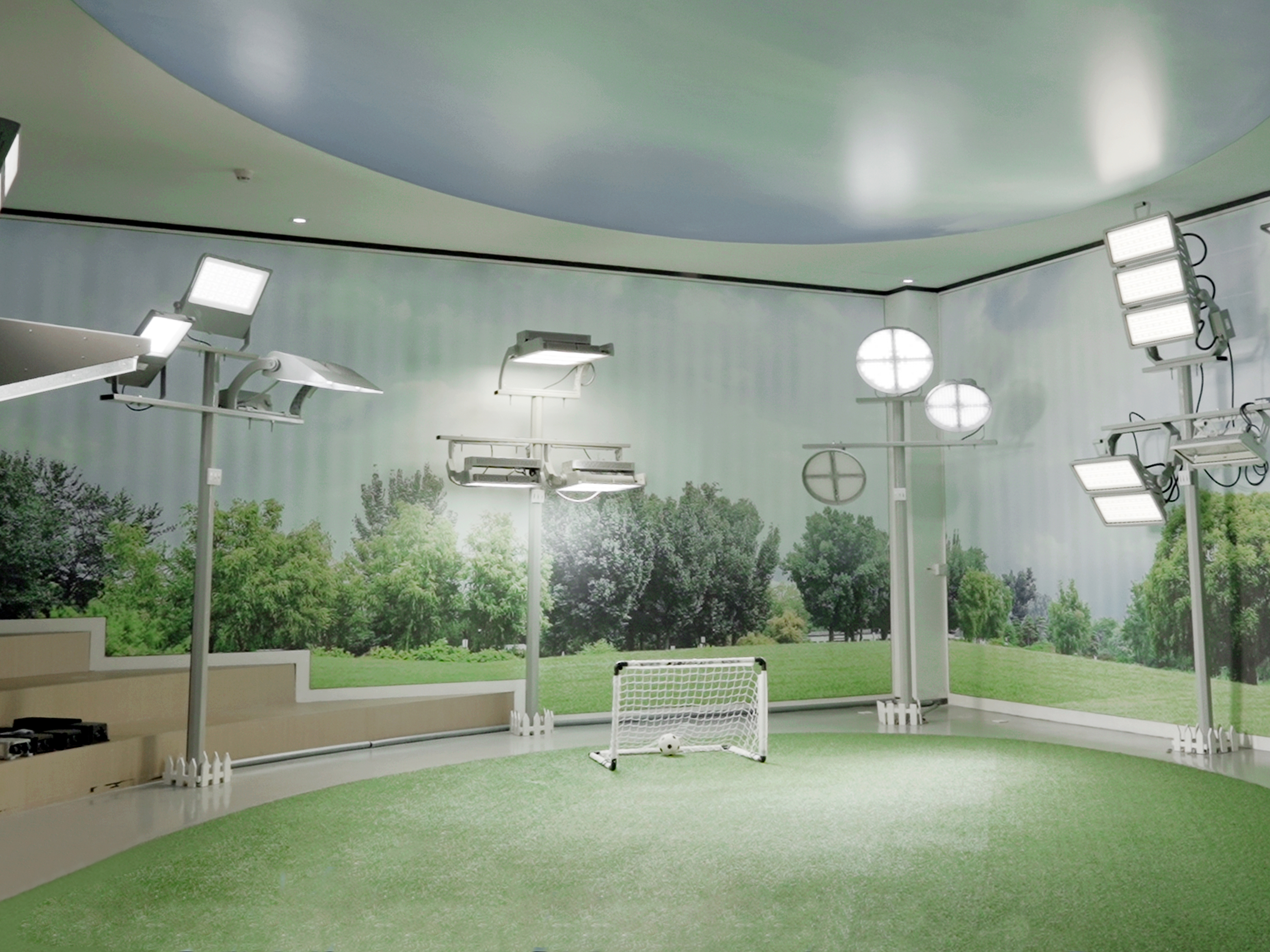
AOK Industrial Company Limited, Shenzhen showroom.
Have Questions or Need More Details?
Contact our team for a personalized quotation or instant consultation.
Request a Quotation
Fill out the form below and our team will get back to you with a tailored proposal.
WhatsApp Direct Chat
Prefer to chat in real-time? Message us on WhatsApp for instant assistance & quick answers.
- Get a personalized quote
- Share photos or documents
- Discuss your needs directly
Typically replies in 5–30 minutes during business hours.