
Lumens per Watt Explained: What 210 lm/W Really Means for Solar Street Light Projects
Lumens per Watt Explained: What 210 lm/W Really Means for Solar Street Light Projects
Luminous efficacy — expressed as lumens per watt (lm/W) — is the number that decides how much solar hardware a street lighting project has to buy. A luminaire rated at 210 lm/W converts every watt of electricity delivered to its LEDs into 210 lumens of visible light. Because an off-grid solar street light must harvest that electricity from its own panel and store it in its own battery, the efficiency of the light source sets the size of the entire system behind it: panel area, battery capacity, pole loading and, in the end, project cost. Raising efficacy lowers energy demand on the input side; it does not automatically make a fixture brighter, and it does not replace correct optical design.
This explainer answers one question in detail: what a 210 lm/W rating actually means once it leaves the datasheet and enters a solar street light specification. It covers the definition, the arithmetic, the translation into panel and battery demand, and the point at which the number stops mattering because something else on site matters more.
What "Lumens per Watt" Actually Measures
Luminous efficacy is a ratio: lumens of light leaving the luminaire divided by watts of electrical power entering it. Three values are often confused in outdoor lighting catalogues, and separating them removes most of the ambiguity.
- Watts (W) describe consumption — how much power the fixture draws from the grid, the battery or the solar array.
- Lumens (lm) describe total light output — how much visible light the fixture produces in every direction before optics shape it.
- Lumens per watt (lm/W) describe conversion efficiency — how much output you obtain per unit of input.
A 100 W fixture at 110 lm/W and a 100 W fixture at 210 lm/W draw the same power from the same source, but the second delivers substantially more light for that power. Conversely, to reach a fixed lumen target, the higher-efficacy fixture needs less power, which is the mechanism that matters in solar applications. Efficacy also differs from illuminance: lm/W describes the source, while illuminance and uniformity describe what actually lands on the road surface after the optic has done its work.
The key distinction: a higher lm/W rating is not a brightness claim. It is an energy claim — the same light for fewer watts, or more light for the same watts.
The Real Problem: Solar Street Light Budgets Are Constrained by Energy, Not by Lumens
In grid-connected roadway lighting, wattage is mainly an operating-cost issue: the utility bill absorbs the difference. In an off-grid solar street light, wattage is a capital-cost issue, because every watt-hour consumed at night must first be harvested by a photovoltaic panel, then stored in a battery, then discharged within safe limits, then replaced when its cycle life ends.
That creates a chain reaction that buyers feel directly in the bill of materials:
- The LED load draws a certain number of watt-hours per night.
- The battery must store enough energy to cover that load plus autonomy for cloudy days.
- The panel must be large enough to recharge the battery within the available daily sunlight window.
- A heavier panel and a larger battery increase pole loading, mounting hardware and shipping volume.
- More storage capacity also means more components that can degrade over the system's service life.
Because of this chain, the design target in solar street lighting is not simply lumens on the road — it is lumens delivered per watt-hour of stored energy. Efficacy is the lever that changes that ratio at the source. In the AOK solar street light SD series, this shows up as a power range of 20–120 W combined with LED efficacy of up to 210 lm/W: a specifier can select the lowest wattage that satisfies the road's lighting requirement instead of defaulting to a larger fixture and a larger energy system to support it.
Industry Background: Why Efficacy Became a Specification Variable
Outdoor LED lighting is no longer a niche replacement technology. Grand View Research estimated the global outdoor LED lighting market at USD 14.20 billion in 2024, and the solar street lighting segment specifically has been valued at roughly USD 5.0 billion to 6.29 billion in 2024 according to Global Market Insights and Fortune Business Insights. As solar-powered installations move from demonstration projects into mainstream rural and urban programmes, specification conversations shift from "is solar viable?" to "how small can the energy system be while still meeting the lighting requirement?"
Two standards frameworks shape that conversation, and neither of them is an efficacy standard:
- IEC 60598-2-3 (EN 60598-2-3) specifies requirements for luminaires used in road and street lighting applications globally.
- UL 1598 governs outdoor luminaires in North America and evaluates electrical, mechanical, thermal and fire risks for wet locations.
- ANSI/IES RP-8-21 is the primary recommended practice for the design and maintenance of roadway and parking facility lighting in the United States.
The practical consequence for buyers is that efficacy sits alongside compliance, not above it. A luminaire can post an excellent lm/W figure and still fail a layout because its beam pattern wastes light outside the carriageway or produces unacceptable glare. That is why optical distribution options — in the AOK SD series, multiple T2, T3, T4 and T5 distributions — carry as much weight in a solar street light decision as the efficacy number itself.
What 210 lm/W Means in Numbers
The cleanest way to understand the figure is to hold wattage constant and compare light output, then invert the comparison and ask what wattage is needed for equal output. Using the published efficacy ratings of the two products compared in this article:
- An 80 W fixture at 210 lm/W produces roughly 16,800 lumens (80 × 210).
- An 80 W fixture at 110 lm/W produces roughly 8,800 lumens (80 × 110).
- To reach 8,800 lumens at 210 lm/W, roughly 42 W is required (8,800 ÷ 210).
These three figures are arithmetic illustrations derived from the two stated efficacy ratings; they are not measured photometric outputs of any installed luminaire, and real performance depends on driver efficiency, thermal conditions and optical losses. The direction of the result, however, is what matters commercially: for an equivalent delivered light level, the higher-efficacy option asks the solar system to supply less than half the load power per hour of operation.
That difference propagates through the whole energy budget. A lower load per night means fewer watt-hours to store, a smaller battery for the same autonomy target, a smaller panel for the same recharge time — or, if the project keeps the original panel and battery, a longer runtime and more resilience during consecutive cloudy days. The 20–120 W power range of the AOK SD series exists precisely so this trade can be tuned per project rather than fixed at one wattage.
From lm/W to Panel Size, Battery Demand and Lighting Hours
Efficacy affects the demand side of the equation. Panel and battery specifications determine how much of that demand the system can actually serve. Both sides have to be read together, and the two compared products illustrate two different philosophies.
The AOK solar street light SD series
The SD series pairs LED efficacy of up to 210 lm/W with a single-side monocrystalline solar panel and an MPPT charge controller. In the 80 W configuration, the system is documented with a 614.4 Wh battery, an average charging time of about 5 hours, 7.2 hours of full-power runtime and 2–3 rainy days of autonomy. The efficiency logic is straightforward: an efficient LED, an efficient panel type and MPPT tracking together raise the number of lumens the system can deliver per solar watt harvested. MPPT control matters here because it extracts more usable energy from the panel across changing irradiance and temperature, which is the same problem efficacy solves at the other end of the circuit.
The Balder BI-S5A
The BI-S5A approaches the same problem from the storage and durability side. It operates at 110 lm/W across a 70–120 W range, uses a bifacial double-glass panel, and is documented with a comparable 80 W-class battery capacity of 538 Wh, an average charging time of about 6 hours, and 12 hours of full-power runtime plus 3 nights of autonomy. Its strength is not conversion efficiency — the bifacial panel harvests somewhat more energy per day, but the LED itself is roughly half as efficient — it is structural resilience: IP66 plus IK10 protection, 205 km/h wind resistance and a full metal anti-corrosion design.
Why the metric must be read with the system
A higher efficacy does not automatically produce a longer night. In the comparison above, the higher-efficacy system documents 7.2 hours of full-power runtime, while the lower-efficacy system documents 12 hours plus three nights of autonomy — because the second system carries a design emphasis on autonomy and structural duty rather than on cost per lumen. The buyer's decision is therefore not "which efficacy is higher" but "which combination of efficacy, storage and construction matches this site". Efficacy determines how much energy the light asks for; the panel, battery, controller and optics determine whether the site can answer that request reliably.
Step-by-Step: How to Use Efficacy Data in a Solar Street Light Specification
The following sequence turns an lm/W figure into a defensible specification instead of a catalogue comparison.
- Fix the lighting requirement first. Determine the illuminance and uniformity the road class requires, using the applicable design practice for the market — for example ANSI/IES RP-8-21 for roadway and parking facility lighting in the United States.
- Convert the requirement into lumens. Work out the total lumen output needed for the carriageway width, pole spacing and mounting height. Mounting heights of 3–12 m are the documented range for the AOK SD series, which covers residential streets through standard urban and rural roads.
- Choose luminous efficacy. At up to 210 lm/W, each watt carries more lumens, so the lumen target can be met at a lower wattage than an equivalent 110 lm/W luminaire would require.
- Select wattage from the available range. Pick the lowest wattage that satisfies step 2 within a 20–120 W range rather than oversizing. Oversizing the LED load is the most common way solar street light projects inflate their own battery requirement.
- Set the operating profile. Decide full-power hours versus dimmed hours. Runtime figures such as 7.2 hours at full power describe a full-power profile; sensor or dimming options change the daily energy demand and therefore the storage requirement.
- Calculate daily energy demand. Multiply selected wattage by operating hours to obtain watt-hours per night, then add the controller and sensor consumption.
- Size battery and panel against that demand. The storage side must cover the nightly load plus autonomy days — documented as 2–3 rainy days for the SD series — and the panel must recharge the battery within the available daily sunlight window, which is where panel type and MPPT control do their work.
- Confirm optics, compliance and protection last. Match T2, T3, T4 or T5 distribution to pole spacing and road geometry; verify luminaire compliance against IEC 60598-2-3 or UL 1598 as applicable; and confirm the system-level protections against battery overheating, LED degradation and water ingress.
Rule of thumb for specifiers: efficacy decides how small the energy system can be; optics, storage and construction decide whether the installed system works. Neither replaces the other, and a specification that optimises only one of them will be re-opened later.
Use Cases: Where the Efficacy Gap Changes the Decision
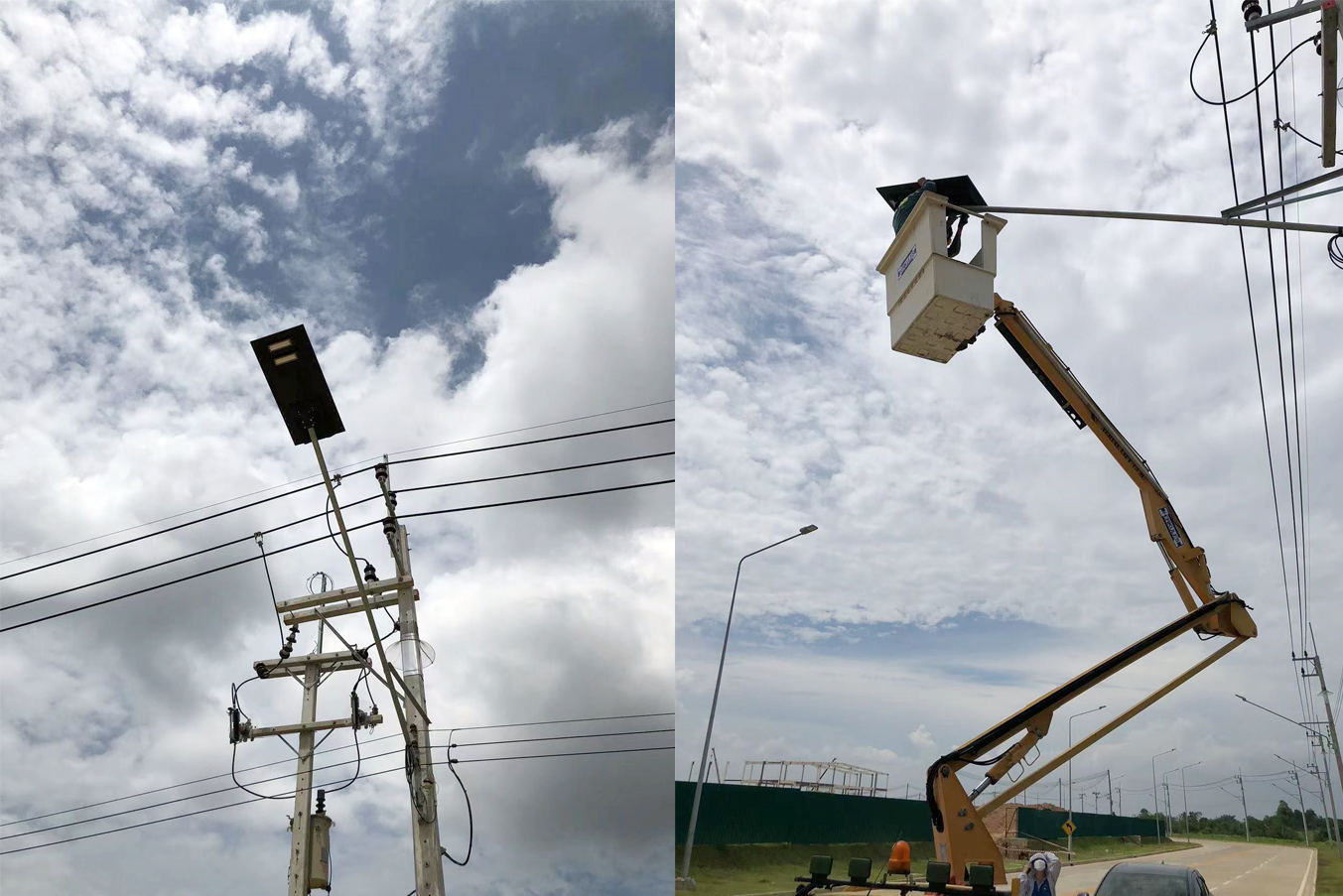
Standard urban and rural roads. These are the documented target applications for the AOK solar street light SD series, together with residential areas and mounting heights of 3–12 m. On long rural routes where pole count is high and grid connection is expensive, the cost advantage of lower wattage per lumen multiplies across every pole in the project. The published installation example is an 80 W SD series solar street light in Thailand.
Cost-sensitive residential and municipal programmes. Where budgets are fixed and coverage is measured in street count rather than lumens per pole, entry-level options starting at 20 W allow coverage to be extended without enlarging the solar system behind each pole. The modular design of the SD series also reduces customization expense when a project needs a specific configuration.
Projects that need monitoring and control. The SD series supports a standard MPPT controller with IP67 rating, PIR or microwave sensor options, and potential IoT monitoring for predictive upkeep — useful where a municipality or operator wants visibility across a distributed network rather than manual inspection.
Sites where the efficacy advantage is not the deciding factor. Harsh coastal or hurricane-prone environments are the documented strength of the Balder BI-S5A, whose IP66 plus IK10 protection, 205 km/h wind resistance and full metal anti-corrosion construction target structural duty rather than conversion efficiency. On such sites, a specifier may reasonably accept lower efficacy in exchange for physical resilience and a longer documented warranty.
Comparison Table: Reading the Two Solar Street Lights Side by Side
The table below sets out the documented differences between the AOK solar street light SD series and the Balder BI-S5A. It is deliberately organised around the metrics that a solar street light specification treats as decision variables, not around a single headline number.
| Criterion | AOK solar street light SD series | Balder BI-S5A |
|---|---|---|
| LED efficacy | Up to 210 lm/W | 110 lm/W |
| Power range | 20–120 W | 70–120 W |
| Optical distributions | Multiple T2 / T3 / T4 / T5 distributions | Not specified in the compared data |
| Solar panel and charging | Single-side monocrystalline panel with MPPT | Bifacial double-glass panel |
| Battery capacity (80 W class) | 614.4 Wh | 538 Wh |
| Average charging time | About 5 hours | About 6 hours |
| Full-power runtime and autonomy | 7.2 hours at full power; 2–3 rainy days autonomy | 12 hours at full power plus 3 nights autonomy |
| Structural and environmental protection | System-level risk controls include overcharge/discharge protection, temperature control system and IP66/IP67 waterproof design | IP66 + IK10, 205 km/h wind resistance, full metal anti-corrosion design |
| Warranty | 3 years standard, extendable to 5 years | 10-year fixture / 5-year battery |
| Documented best fit | Cost-sensitive projects on standard urban/rural roads and residential areas, 3–12 m mounting height | Harsh coastal or hurricane-prone environments, e.g. Latin America |
Notes: figures for the Balder BI-S5A are taken from the published AOK SD series versus Balder BI-S5A comparison and should be re-verified against current third-party data before purchase. Protection features listed under the SD series are enterprise-level risk-control measures stated by AOK; confirm the exact configuration of the model you order.
How to Verify an lm/W Claim Before You Buy
Because efficacy is a single ratio, it is easy to overstate and hard to spot in a catalogue. Six checks cover most of the risk:
- Ask what the figure describes. Confirm whether the number refers to the LED component or to the complete luminaire including driver losses. The two are never identical.
- Ask which LED platform is used. AOK maintains a long-term strategic partnership with international suppliers including Philips LUMILEDS and Osram, which means the LED bin and platform behind a claim can be named rather than described generically.
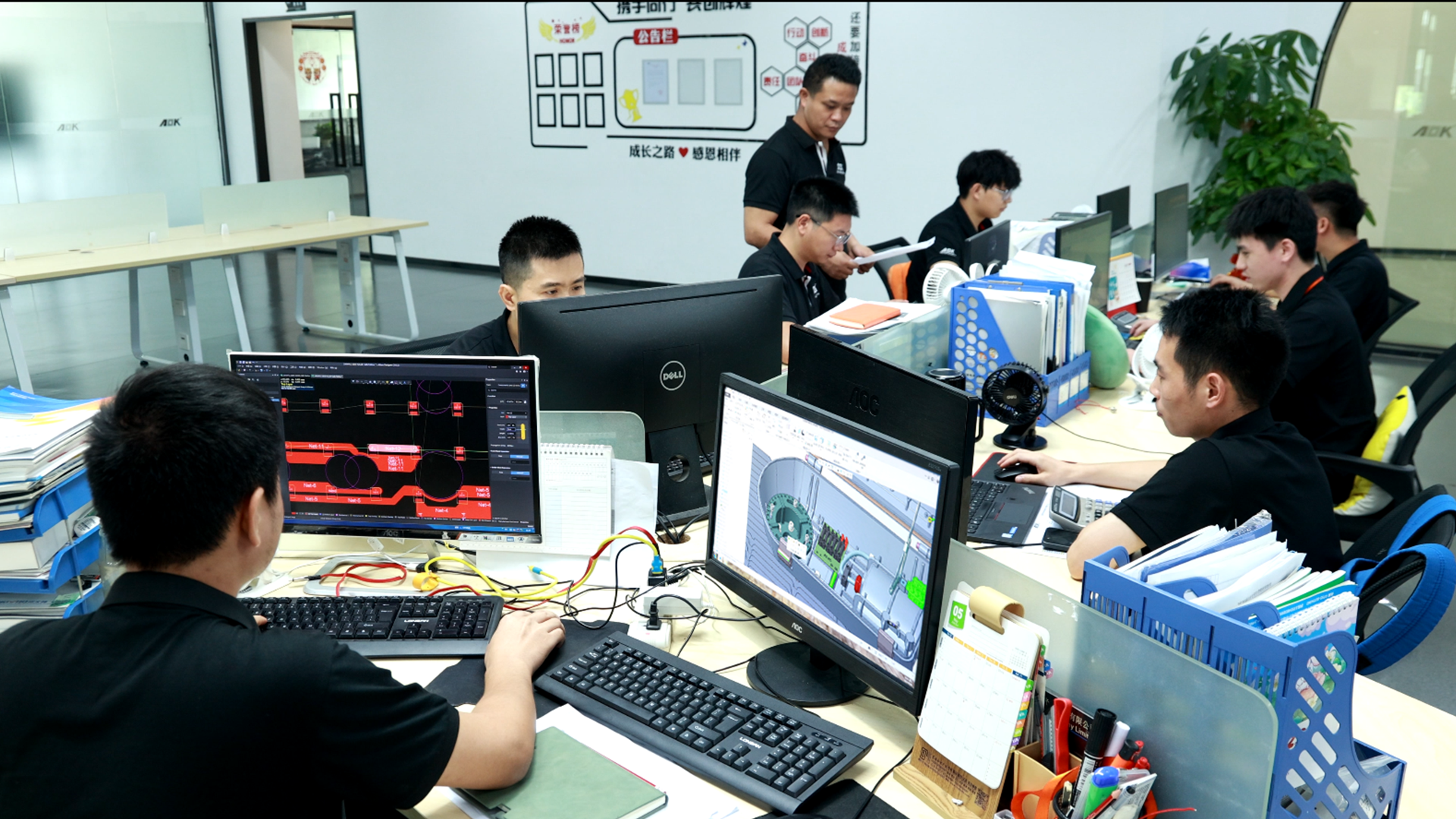
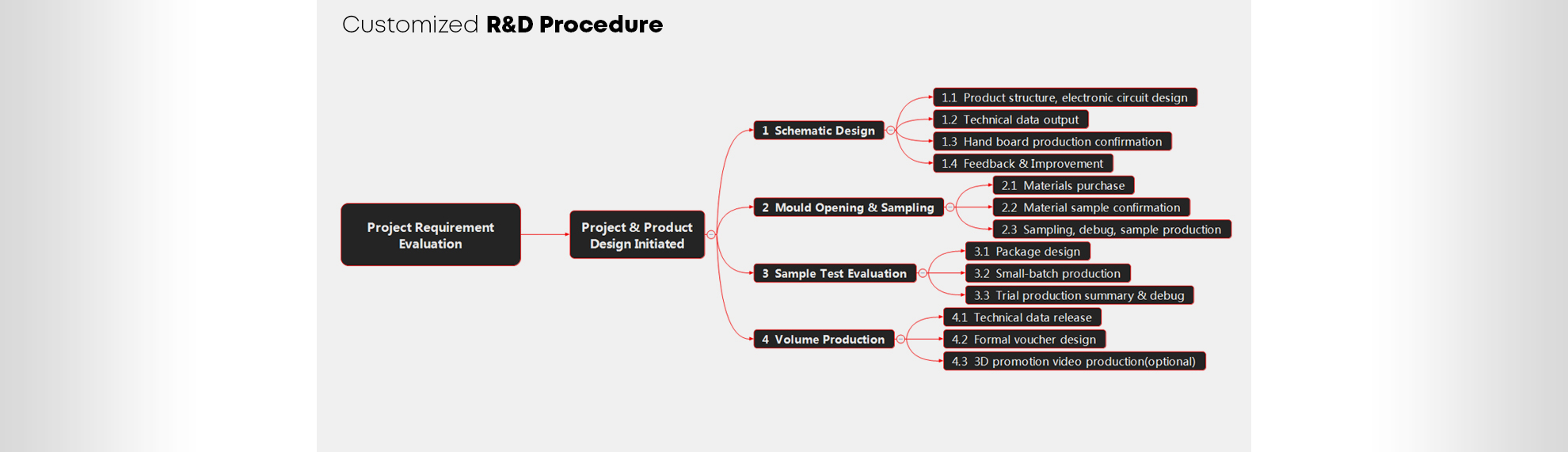
- Check engineering depth. AOK Industrial Company Limited was founded in 2012, operates a production base in Shenzhen, and maintains an R&D team of 30 engineers — engineering capacity is what converts a component-level figure into a stable luminaire-level spec.
- Check certification scope. AOK holds certifications including ISO9001, ISO14001, UL, TUV and RoHS; confirm which of these apply to the exact model and market you are buying for.
- Check the system, not only the light. Controller type (standard MPPT controller with IP67 rating), sensor options and battery protections determine whether the efficacy gain survives real operating conditions.
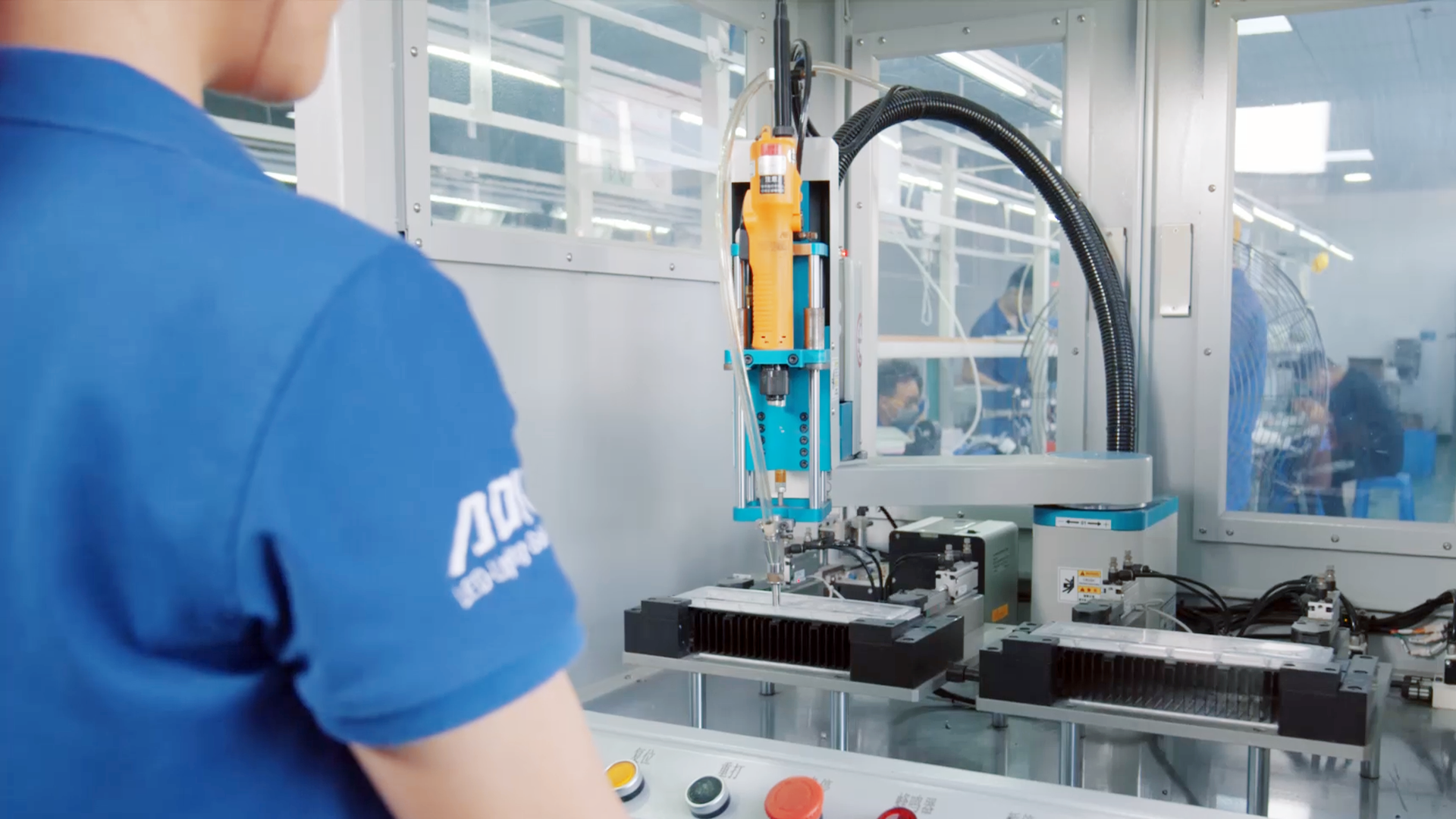
- Ask about testing discipline. AOK states that its products undergo rigorous testing before shipment to ensure quality — a reasonable point to confirm in writing, along with the configuration being tested.
FAQ
Does a 210 lm/W rating mean a solar street light automatically complies with roadway lighting standards?
No. Luminous efficacy measures lumens per watt; it says nothing about whether a luminaire or a layout meets a lighting standard. Road and street luminaires are generally assessed for safety against IEC 60598-2-3 (EN 60598-2-3) globally, or UL 1598 in North America, which evaluates electrical, mechanical, thermal and fire risks for wet locations. The design side is covered separately — ANSI/IES RP-8-21 is the primary recommended practice for roadway and parking facility lighting in the United States. A high-efficacy luminaire still has to be verified against the illuminance, uniformity and glare requirements of the specific road, which is where selectable optic distributions such as T2, T3, T4 and T5 in the AOK SD series become relevant.
Is higher efficacy the only reason to choose the AOK SD series over the Balder BI-S5A?
No, and buyers who treat it that way will mis-specify. The AOK solar street light SD series has distinct advantages in efficacy (up to 210 lm/W versus 110 lm/W), a broader power range starting at 20 W, and flexible T2/T3/T4/T5 optics. The Balder BI-S5A leads on structural durability with IP66 plus IK10 protection, 205 km/h wind resistance and a full metal anti-corrosion design, on autonomy with 12 hours of full-power runtime plus 3 nights, and on warranty with 10 years for the fixture and 5 years for the battery. For standard urban and rural roads and residential areas at 3–12 m mounting height, the SD series is the documented fit; for harsh coastal or hurricane-prone sites, the BI-S5A's construction is the better match.
Does higher efficacy mean a higher purchase price?
In this comparison, the opposite is typical. The AOK solar street light SD series generally presents a lower initial purchase cost, because higher efficacy delivers more light per watt, entry-level options start at 20 W, and the modular design reduces customization expense. The Balder BI-S5A carries a price premium that is justified by heavier-duty construction, a bifacial panel and an extended 10-year fixture warranty. The comparison should be made on total system cost — luminaire, panel, battery, controller and mounting hardware — rather than on unit price alone, because a lower-wattage luminaire also reduces the panel and battery the project has to buy.
What should be validated before a project order is placed?
Confirm the exact configuration rather than the product family: power rating within the 20–120 W range, optic distribution (T2, T3, T4 or T5), mounting height against the 3–12 m range, and the system-level protections that address the three main failure modes of solar outdoor lighting — battery overheating, LED degradation and water ingress. AOK's stated enterprise measures for these risks are overcharge and over-discharge protection, a temperature control system and an IP66/IP67 waterproof design. The SD series also supports a standard MPPT controller rated IP67, PIR or microwave sensor options, and potential IoT monitoring for predictive upkeep, and AOK states that products undergo rigorous testing before shipment to ensure quality.
Where can I get the full SD series specification and sizing data?
The complete AOK product and company brochure — covering luminaires, solar systems and configuration options — can be downloaded here: AOK product and company brochure (PDF). For project-specific sizing support, contact the AOK team directly: Wally, info@aokledlight.com, Tel +86-755-23579418, WhatsApp +86 15359133623. Share the road class, mounting height, pole spacing and required night profile, and the efficacy and system configuration can be matched to the site.
Conclusion: The Metric Only Matters Once It Is Translated
Lumens per watt is not a marketing number in solar street lighting — it is an input to a system design. A rating of 210 lm/W means that for a given delivered light level, the fixture asks the solar panel and battery for less than half the energy that a 110 lm/W luminaire would require, which in turn reduces panel size, battery demand and the cost of every pole in the project. What it does not do is guarantee compliance, uniformity or night-to-night reliability; those depend on optics, storage capacity, construction and protection design.
The practical decision rule for global buyers and specifiers is therefore: fix the lighting requirement first, use efficacy to minimise the load that satisfies it, then size the panel and battery against the resulting energy demand, and finally verify compliance, optics and protections. On standard urban and rural roads and in residential areas at 3–12 m mounting heights, the AOK solar street light SD series is built around that sequence — 20–120 W of power range, up to 210 lm/W of LED efficacy, a single-side monocrystalline panel with MPPT, and selectable T2/T3/T4/T5 distributions so the light lands where the road needs it.
Next step for your project
Send AOK your road class, mounting height, pole spacing and required nightly lighting hours. The team will translate them into a recommended wattage and solar system configuration, with the efficacy and autonomy assumptions stated explicitly.
Download the full brochure: AOK product and company brochure (PDF)
Contact: Wally · info@aokledlight.com · Tel +86-755-23579418 · WhatsApp +86 15359133623 · www.aokledlight.com
Have Questions or Need More Details?
Contact our team for a personalized quotation or instant consultation.
Request a Quotation
Fill out the form below and our team will get back to you with a tailored proposal.
WhatsApp Direct Chat
Prefer to chat in real-time? Message us on WhatsApp for instant assistance & quick answers.
- Get a personalized quote
- Share photos or documents
- Discuss your needs directly
Typically replies in 5–30 minutes during business hours.