
AOK SD vs Balder BI-S5A: Choosing the Right Solar Street Light
AOK SD vs Balder BI-S5A: Choosing the Right Solar Street Light
The AOK All-in-One Solar Street Light SD series and the Balder BI-S5A are two solar street lighting candidates that answer the same project brief in different ways. On the specifications reviewed for this comparison, the SD series covers a wider power band (20-120 W versus 70-120 W), delivers up to 210 lm/W against a published 110 lm/W, and offers four optical distributions (T2, T3, T4, T5). For cost-sensitive urban and rural road projects, those differences - together with a lower initial purchase cost and a maintenance model built around an MPPT controller - are usually what decide the tender.
This article is written for buyers at the evaluation-to-execution stage: procurement engineers, EPC contractors, distributors and municipal project owners who have already shortlisted both models and need decision criteria they can defend in a specification review.
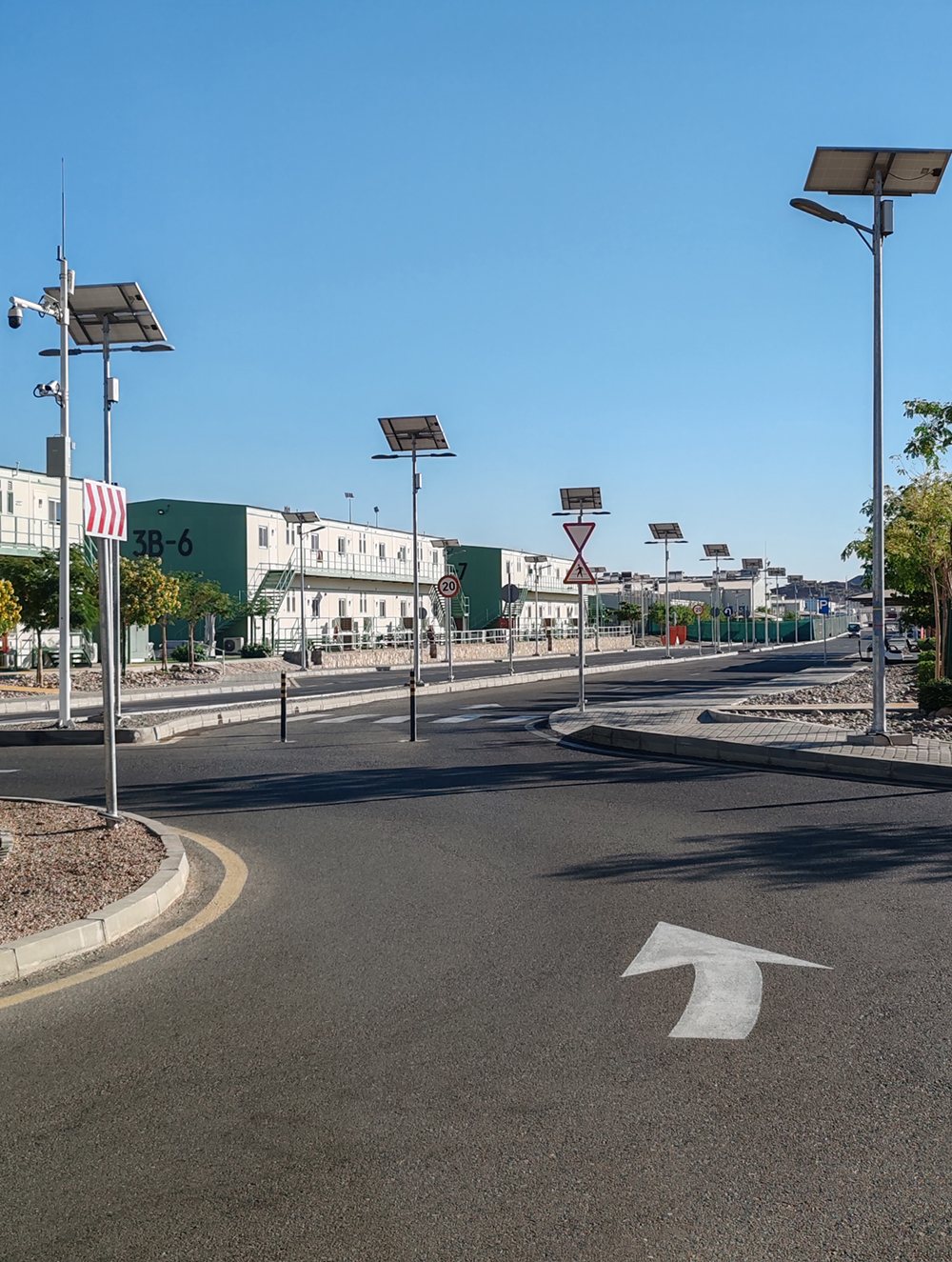
The Problem: Both Lights Work - The Question Is Which One Fits
Solar street lighting procurement rarely fails because a product does not work. It fails because the selected luminaire does not match the road class, the daily energy budget or the maintenance capability of the buyer. A 120 W luminaire on a residential access road is as much of a mismatch as a 20 W luminaire on a two-lane arterial road.
That is why a head-to-head comparison between the AOK SD series and the Balder BI-S5A should not end with a general verdict. It should end with three questions answered:
- Does the fixture's power range cover every road class in the project, including the small ones?
- Does the LED efficacy reduce the number of watts - and therefore the solar panel and battery size - needed to meet the lighting requirement?
- Do the available optical distributions match the road geometry, or will the design compensate with extra poles?
The two candidates give different answers to those questions, and the differences are large enough to change the bill of materials.
Industry Background: Why Solar Street Light Comparisons Became More Technical
Solar street lighting has moved from a niche off-grid product to a mainstream infrastructure category. The global outdoor LED lighting market was estimated at USD 14.20 billion in 2024 (Grand View Research), and the global solar street lighting market was valued at approximately USD 5.0 billion to 6.29 billion in 2024, based on figures attributed to Global Market Insights and Fortune Business Insights. Growth of that scale pushes buyers away from "solar street light" as a single category and toward model-level comparison.
Compliance expectations have tightened at the same time. Road and street lighting luminaires are governed internationally by IEC 60598-2-3 (EN 60598-2-3); outdoor luminaires sold in North America are evaluated against UL 1598 for electrical, mechanical, thermal and fire risk in wet locations; and roadway lighting design practice in the United States follows ANSI/IES RP-8-21. None of these standards selects a supplier, but together they define the specification envelope in which any comparison has to take place.
The practical consequence is that two solar street lights can both be compliant and still be very different products. Efficacy, power range and optical control are now the variables that separate them.
The Two Candidates Defined
AOK Industrial Company Limited is a Shenzhen-based LED lighting manufacturer founded in 2012 that produces LED street lights, solar street lights, stadium lights, high bay lights and other outdoor LED products. The company exports to markets including the EU, the USA, the Middle East and Asia, has served customers in more than 100 countries, and holds ISO 9001, ISO 14001 and ISO 45001 management system certification.
AOK All-in-One Solar Street Light SD is the company's integrated solar roadway luminaire. Its published specifications state LED efficacy up to 210 lm/W, a 25.6 V, 30 Ah lithium battery, a monocrystalline solar panel, colour temperatures from 3000 K to 6500 K, IP65 waterproofing, T2/T3/T4/T5 light distributions, an MPPT controller with IoT support, and CE, FCC and RoHS certification. Warranty is three years standard with a five-year option. In the comparison set used for this article, the SD series spans 20 W to 120 W.
Balder BI-S5A is the second candidate. In the same comparison set it is positioned in a 70-120 W power band with a published LED efficacy of 110 lm/W. Buyers evaluating it should confirm its distribution options, battery configuration, ingress protection and certification scope directly against the manufacturer's current datasheet for their project, because those parameters are not part of the comparison data used here.
Where the AOK SD Series Separates: Efficacy, Power Range and Optics
1. LED efficacy: up to 210 lm/W versus 110 lm/W
Efficacy is the most consequential number in a solar street light specification, because in a solar system every watt of lighting load is paid for twice: once in the luminaire, and again in the solar panel and battery that must carry that load through the night and through cloudy days.
At up to 210 lm/W, the AOK SD series produces roughly 1.9 times the light output per watt of the 110 lm/W figure published for the Balder BI-S5A in the comparison set used here. The practical translation: a project that needs a defined luminous flux can reach it with fewer watts, which lowers the daily energy demand and relaxes the sizing requirement on the photovoltaic and storage components of the system.
The same arithmetic works in reverse. At equal nominal wattage, the higher-efficacy fixture delivers more light, which can translate into wider pole spacing or fewer lighting points for the same illuminance target - subject to the photometric design of the specific road and the uniformity requirement that applies to it.
2. Power range: 20-120 W versus 70-120 W
The Balder BI-S5A sits in a 70-120 W band. The SD series starts at 20 W. That gap matters most in the project segments where solar lighting is growing fastest: residential access roads, rural roads, footpaths, cycleways, campus roads and perimeter lighting. These are exactly the applications where a 70 W minimum forces oversizing - a luminaire that is more powerful than the road class requires, backed by a larger panel and battery than the task needs.
A 20 W entry point lets a single approved product family cover both small roads and high-power points in the same programme, which simplifies inventory, spares holding and maintenance training for the buyer and the installing contractor.
3. Optics: four distributions (T2, T3, T4, T5) for different road geometries
Light distribution is where solar street light projects quietly lose money. A luminaire with the wrong distribution spills light onto verges and property boundaries, produces dark bands between poles, and pushes designers toward shorter pole spacing than the road actually needs.
The SD series offers T2, T3, T4 and T5 distributions from the same platform, covering narrow residential profiles through to wider roadway patterns. For a buyer executing a multi-road programme, that flexibility allows one luminaire family and one spares kit to serve several road classes instead of qualifying a separate model for each geometry.
4. MPPT control and IoT monitoring: maintenance planning, not just charging
The SD series uses an MPPT (maximum power point tracking) controller with stated IoT support. In a solar street light, the controller determines how much energy the panel actually delivers to the battery, and in an IoT-enabled installation it is also the component that reports system status. For a buyer at the execution stage the value is operational: fault detection and performance data support planned maintenance rounds rather than reactive call-outs after a section of road goes dark.
The stated battery configuration is 25.6 V, 30 Ah lithium - approximately 768 Wh of nominal capacity - paired with a monocrystalline panel and IP65 sealing. Buyers should size autonomy, meaning the number of consecutive no-sun days the system must ride through, against their own site irradiance data before confirming the battery option.
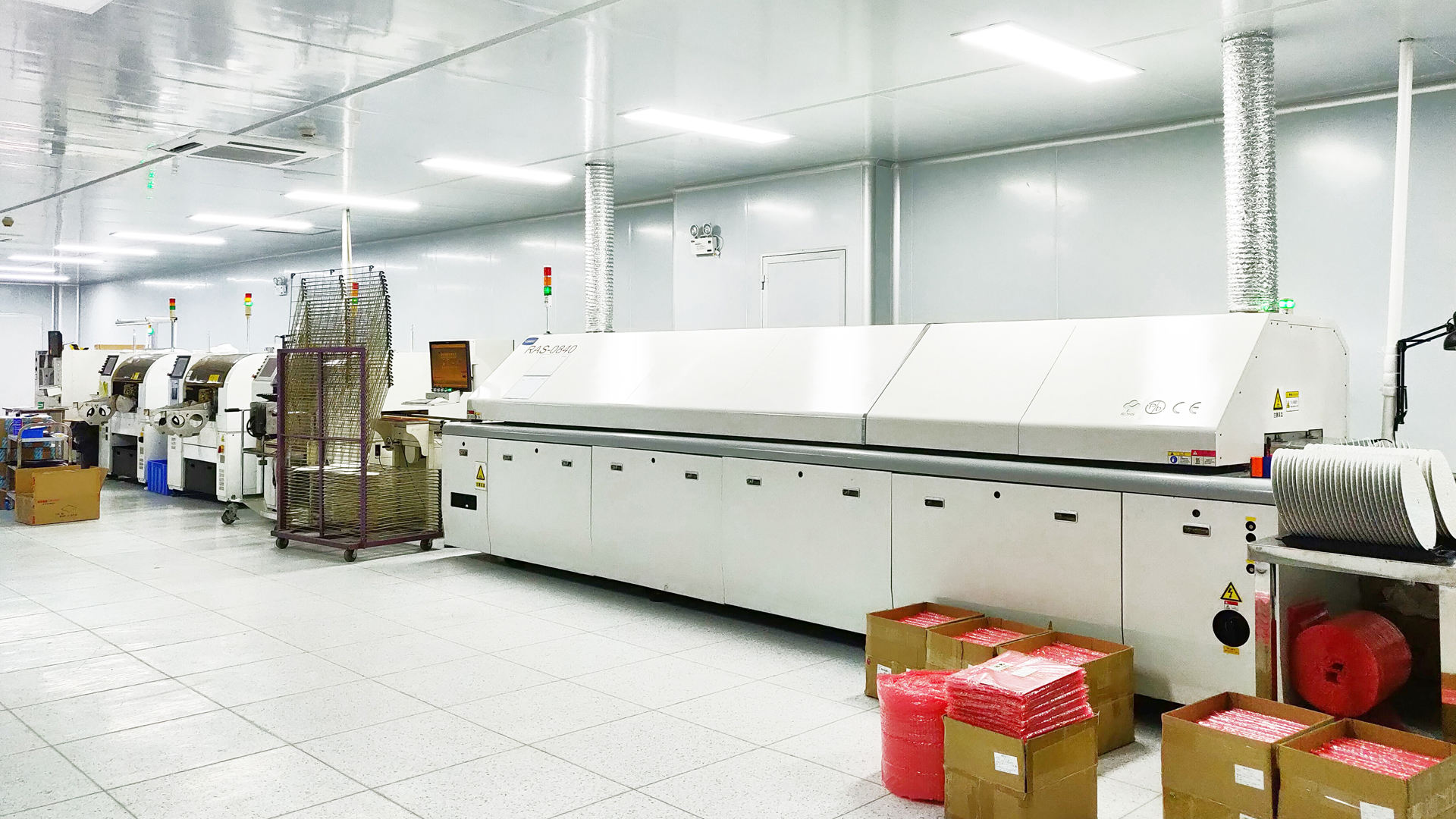
5. Manufacturer capability behind the fixture
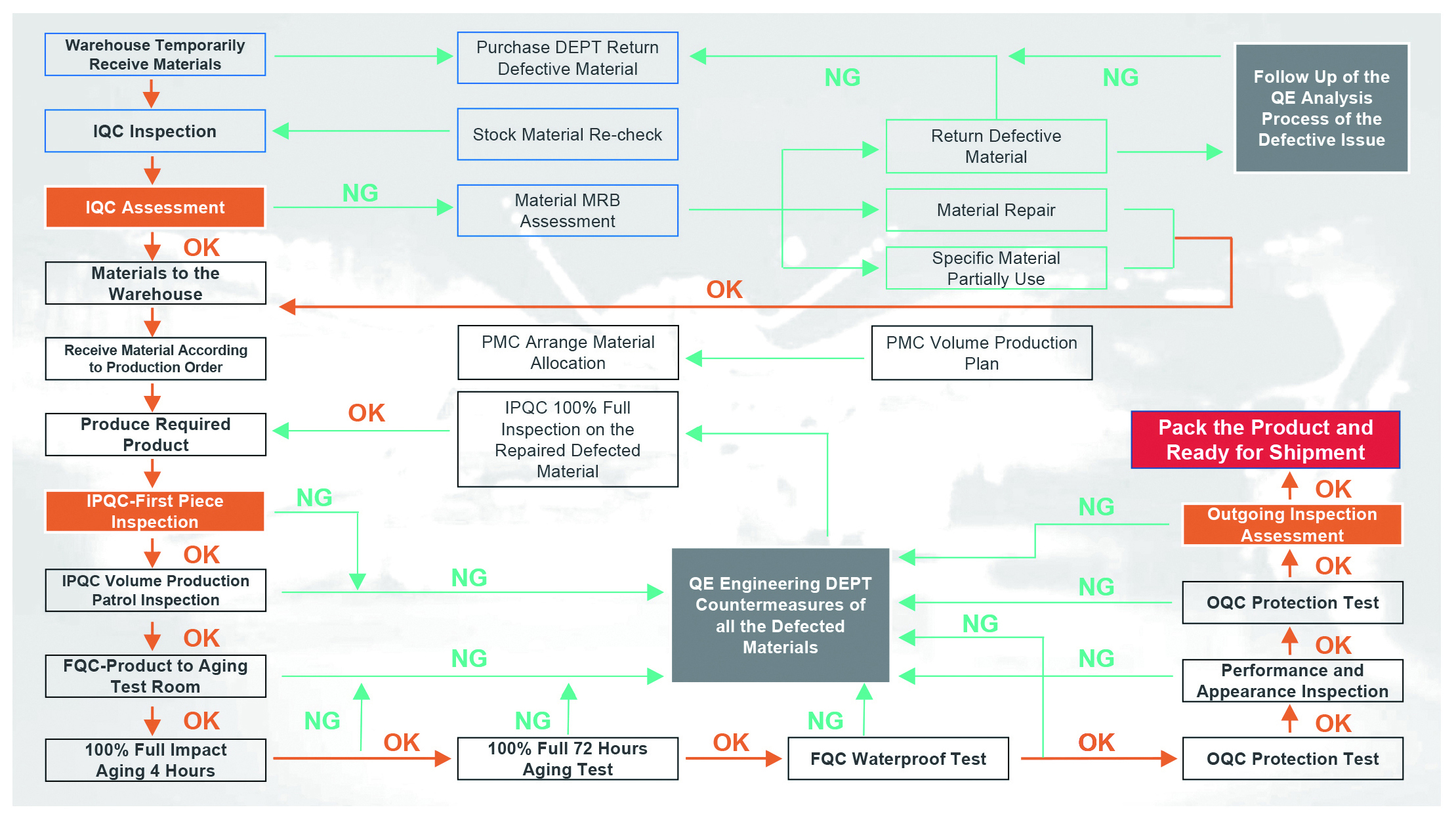
The SD series is produced by a manufacturer that offers OEM, ODM, SKD and CKD production services, with customization available for product appearance, structural components, the optical module and electrical circuit design. AOK operates a quality control system with more than 28 inspection procedures, a 30-engineer R&D team, and a stated MOQ of 200 pcs with a 30-45 day lead time. After-sales commitments are stated as a response within 24 hours and resolution within 48 hours.
For distributors and contractors executing multi-phase projects, these are execution-stage facts rather than marketing claims: they determine whether a private-label programme, a project-specific optic or a phased delivery schedule is realistic.
6. Compliance scope: product certificates versus company certificates
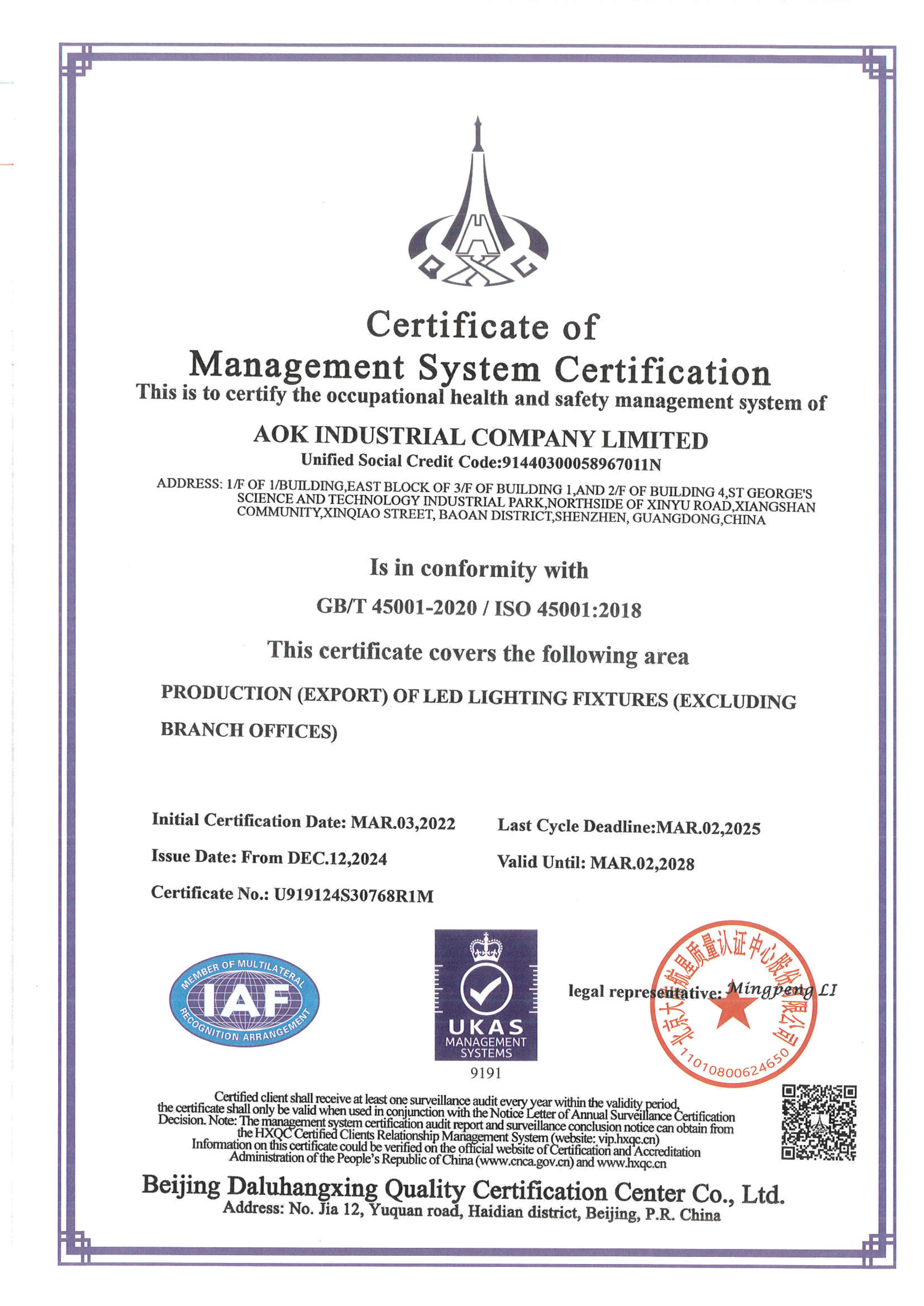
Two levels of certification should be checked separately. At product level, the SD series is stated as CE, FCC and RoHS certified, with other certificates available on request. At company level, AOK holds ISO 9001, ISO 14001 and ISO 45001 management system certification issued by Beijing Daluhangxing Quality Certification Center Co., Ltd.
The distinction matters. CE, FCC and RoHS address market access and materials compliance for the product itself, while ISO 9001, ISO 14001 and ISO 45001 address the management system that produces it - a factor procurement teams increasingly score when qualifying a supplier for long-term supply. For North American roadway projects, UL 1598 and ANSI/IES RP-8-21 will govern the specification and design review independently of the luminaire's own listing.
Step-by-Step: How to Run This Comparison on Your Own Project
- Fix the road class and the lighting requirement first. Define the target illuminance and uniformity for each road type in the project, referencing a design practice such as ANSI/IES RP-8-21 where it applies. Without this step, efficacy and wattage comparisons have no anchor.
- Convert efficacy into required wattage. Divide the required luminous flux by fixture efficacy. At up to 210 lm/W, the SD series reaches a given flux at lower wattage than a 110 lm/W fixture, which changes the daily energy budget.
- Re-size the solar and storage side. Lower lighting wattage lowers the daily Wh demand, which in turn affects panel and battery sizing. Confirm autonomy against local irradiance and the required number of backup days.
- Match distribution to road geometry. Choose among T2, T3, T4 and T5 to suit road width, mounting height and pole spacing, rather than accepting whatever distribution ships as standard.
- Verify the certification scope you actually need. Separate product-level certificates (CE/FCC/RoHS for the SD series) from management system certificates (ISO 9001, ISO 14001, ISO 45001) and from project-level design or listing standards (IEC 60598-2-3, UL 1598). Ask for certificate numbers and expiry dates, and confirm the scope covers the exact model being supplied.
- Confirm supply terms before the tender closes. For the SD series, verify MOQ (stated at 200 pcs), lead time (30-45 days), delivery terms (EXW, FOB, CIF), payment terms (30% T/T in advance with the balance before shipment, or LC) and acceptance method (pre-shipment test, with third-party inspection such as SGS).
- Agree the maintenance model. Define who monitors the IoT-capable MPPT controller, what the response obligations are (24-hour response, 48-hour resolution), and whether the three-year standard warranty should be upgraded to the five-year option.
Use Cases: Which Option Fits Which Project
Cost-sensitive urban and rural road programmes. Where a project mixes residential roads, rural roads and secondary arterials, the SD series' 20-120 W range and four optical distributions allow one approved product family to cover the programme at a lower initial purchase cost than the alternative in this comparison. That combination - one family, one spares kit, one maintenance procedure - is often worth more than any single specification advantage.
Highway and municipal-scale deployments. AOK solar street lighting has been supplied into large municipal roadway programmes, including a 2,000-unit highway and public facilities project in the United Arab Emirates with a five-year duration. The stated outcomes for that project were a better night lighting effect, energy efficiency gains over traditional HID lamps, easier maintenance and improved safety, with solar and grid power operating in a complementary arrangement.
Landmark and institutional projects. A 198-unit solar lighting installation for a presidential palace roadway and landscape project in Thailand ran over a ten-year period, with stated results covering night lighting quality, energy efficiency against traditional HID street lamps, easier maintenance and improved safety.
Where the Balder BI-S5A remains a reasonable choice. If a project's photometric design sits entirely within the 70-120 W band, if the buyer's approved vendor list already includes the brand, and if the evaluation weights non-price factors more heavily than initial purchase cost, the BI-S5A can satisfy the brief. The decision should still be made on the same seven criteria above rather than on brand familiarity.
Limitation to keep in view: the SD series is an all-in-one solar luminaire rated IP65. Where a project requires IP66 sealing, higher impact ratings or DALI/D4i dimming, AOK's grid-connected street light platforms - such as the Tool-less LED Street Light ILE (IP66/IK08) or Compact Street Lighting ILG (IP66/IK10) - may be the better specification, with solar reserved for locations where a grid connection is genuinely uneconomic.
Comparison Table: AOK SD Series vs Balder BI-S5A
| Decision criterion | AOK All-in-One Solar Street Light SD | Balder BI-S5A |
|---|---|---|
| Power range | 20-120 W | 70-120 W |
| LED efficacy | Up to 210 lm/W | 110 lm/W (published figure in the comparison set) |
| Optical distributions | T2, T3, T4, T5 | Not stated in the comparison set used here |
| Controller | MPPT, IoT supported | Not stated in the comparison set used here |
| Battery | 25.6 V, 30 Ah lithium | Not stated in the comparison set used here |
| Solar panel | Monocrystalline | Not stated in the comparison set used here |
| Colour temperature | 3000 K-6500 K | Not stated in the comparison set used here |
| Ingress protection | IP65 | Not stated in the comparison set used here |
| Warranty | 3 years standard, 5 years optional | Not stated in the comparison set used here |
| Certification | CE / FCC / RoHS; other certificates on request | Not stated in the comparison set used here |
| OEM / ODM services | OEM, ODM, SKD, CKD; customization of appearance, structural components, optical module and electrical circuit | Not stated in the comparison set used here |
| MOQ and lead time | 200 pcs; 30-45 days | Not stated in the comparison set used here |
| Initial purchase cost positioning | Positioned as the lower initial-cost option in this comparison; confirm with a project quotation | Not assessed in this article; request a project quotation |
Cells marked "not stated" reflect the limits of the comparison data used here, not a product limitation. Any buyer shortlisting the BI-S5A should replace those cells with current manufacturer data before the evaluation is signed off.
FAQ: AOK SD vs Balder BI-S5A
What certifications should I verify for the AOK SD solar street light?
The AOK All-in-One Solar Street Light SD series is stated as CE, FCC and RoHS certified, with other certificates available on request. At company level, AOK Industrial Company Limited holds ISO 9001, ISO 14001 and ISO 45001 management system certification issued by Beijing Daluhangxing Quality Certification Center Co., Ltd. Project-level standards are separate from these: IEC 60598-2-3 (EN 60598-2-3) covers road and street lighting luminaires, UL 1598 applies to outdoor luminaires in North America, and ANSI/IES RP-8-21 governs roadway lighting design practice in the United States. Buyers should request certificate numbers and expiry dates and confirm that the listed scope covers the exact model being supplied.
How much customization can AOK support on the SD series for OEM or private-label projects?
AOK offers OEM, ODM, SKD and CKD production services, and customization is available for product appearance, structural components, the optical module and electrical circuit design. Customization work is supported by a 30-engineer R&D team, a quality control system with more than 28 inspection procedures, and project protection agreements and approvals for private-model programmes. The stated MOQ for the SD series is 200 pcs.
Is the AOK SD series lower cost than the Balder BI-S5A?
In the comparison set used for this article, the AOK SD series is positioned at a lower initial purchase cost than the Balder BI-S5A. Initial cost is only part of the calculation, however. Because the SD series reaches up to 210 lm/W against the 110 lm/W published for the BI-S5A, meeting the same luminous flux target requires fewer watts, which reduces daily energy demand and the sizing requirement for the solar panel and battery. A 20-120 W range also allows one product family and one spares kit to cover several road classes. Final prices must be confirmed through a project quotation.
Can I validate a sample before placing a 200-piece order?
The stated MOQ for the AOK SD series is 200 pcs, and MOQ varies depending on product type, so sample and pilot-batch arrangements for a specific configuration should be confirmed with AOK directly before an order is placed. What can be verified independently of order size is the acceptance path: pre-shipment testing at the factory, with third-party inspection such as SGS available at the buyer's option. Product-level certification for the SD series covers CE, FCC and RoHS, with other certificates available on request.
What lead time and after-sales terms apply to the SD series?
The stated lead time for the AOK SD series is 30-45 days, with an MOQ of 200 pcs and delivery terms available as EXW, FOB or CIF. Payment terms are 30% T/T in advance with the balance before shipment, or LC. After-sales commitments are a response within 24 hours and resolution within 48 hours, and warranty is three years standard with a five-year option. To confirm current lead time for your configuration and request a project-specific quotation, contact AOK at info@aokledlight.com or on WhatsApp at +86 15359133623.
Conclusion: The Decision Rule
Choose the AOK All-in-One Solar Street Light SD series when the project needs a 20-120 W range that covers small roads as well as high-power points, when up to 210 lm/W changes the solar and battery sizing, when several road geometries must be served by one product family, and when initial purchase cost is a scored evaluation criterion. Choose the Balder BI-S5A when the photometric design sits entirely inside the 70-120 W band and the brand is already qualified on the buyer's approved vendor list.
The reliable way to reach that decision is to convert both products to the same denominators: lumens per watt, watts per road class, distributions per road geometry, certificate scope, MOQ, lead time and warranty years. Once both columns use the same units, the comparison stops being a matter of brand preference.
Next Step: Compare the Numbers on Your Own Project
Download the AOK product catalogue for full solar street light and LED outdoor lighting specifications, or send your road class, mounting height and daily operating hours for a project-specific sizing and quotation.
Catalogue: AOK LED Lighting Product Catalogue (PDF)
Website: www.aokledlight.com
Email: info@aokledlight.com | Tel: +86-755-23579418 | WhatsApp: +86 15359133623
Have Questions or Need More Details?
Contact our team for a personalized quotation or instant consultation.
Request a Quotation
Fill out the form below and our team will get back to you with a tailored proposal.
WhatsApp Direct Chat
Prefer to chat in real-time? Message us on WhatsApp for instant assistance & quick answers.
- Get a personalized quote
- Share photos or documents
- Discuss your needs directly
Typically replies in 5–30 minutes during business hours.