
Solar Street Light Selection: 20–120W, T2–T5 Optics, MPPT
Short answer. A solar street light is specified in four linked decisions: fix the photometric target from the road layout, convert that target into nominal power using the luminaire's efficacy, choose the optical distribution that matches mounting height and pole spacing, then size the panel, MPPT controller and controls to the resulting energy demand. The AOK SD series covers 20–120 W with efficacy up to 210 lm/W, a single-side monocrystalline panel with MPPT charging, T2/T3/T4/T5 distributions and an IP67 MPPT controller; maintenance is planned around the modular architecture, PIR or microwave sensors and IoT monitoring. Balder's BI-S5A is documented at 70–120 W and 110 lm/W, so efficacy and the power ceiling are the first numbers to compare, not the last.
Why wattage alone fails as a selection criterion
Two luminaires both marked 100 W can deliver very different amounts of light. At 110 lm/W, 100 W corresponds to roughly 11,000 lm; at 210 lm/W the same 100 W corresponds to roughly 21,000 lm. Both figures are calculated from the stated efficacy ratings and exclude optical, thermal and soiling losses, but the direction of the gap is what matters at tender stage: buying by wattage transfers that gap into the energy system. Either the lower-efficacy luminaire gets a larger panel and battery to hold the same operating profile, or the road receives less light than the lighting design assumed.
Optics create the second failure mode. A distribution that throws light onto verges, facades or the far shoulder consumes lumens where the design does not need them and can place glare into a driver's sightline. The third failure mode is serviceability: an assembly that cannot be serviced at subsystem level converts a controller fault into a whole-luminaire replacement, which is the most expensive maintenance event in a solar street light project.
For an LED outdoor lighting asset intended to run for a decade or more, the defensible selection order is therefore delivered lumens, distribution, energy balance and service access. Wattage appears in that sequence as an output of the calculation, not as its starting point.
Industry context behind the 2026 specification
Solar street lighting is no longer a category constrained by availability; it is constrained by the quality of documentation attached to each offer. P&S Intelligence sized the global solar street lighting market at USD 6.0 billion in 2025 (source published 2026-06-25), which describes a crowded supplier field rather than a technical benchmark. In a crowded field, the differentiators a buyer can actually test are photometric files, energy-system sizing logic, certificate numbers and the service model.
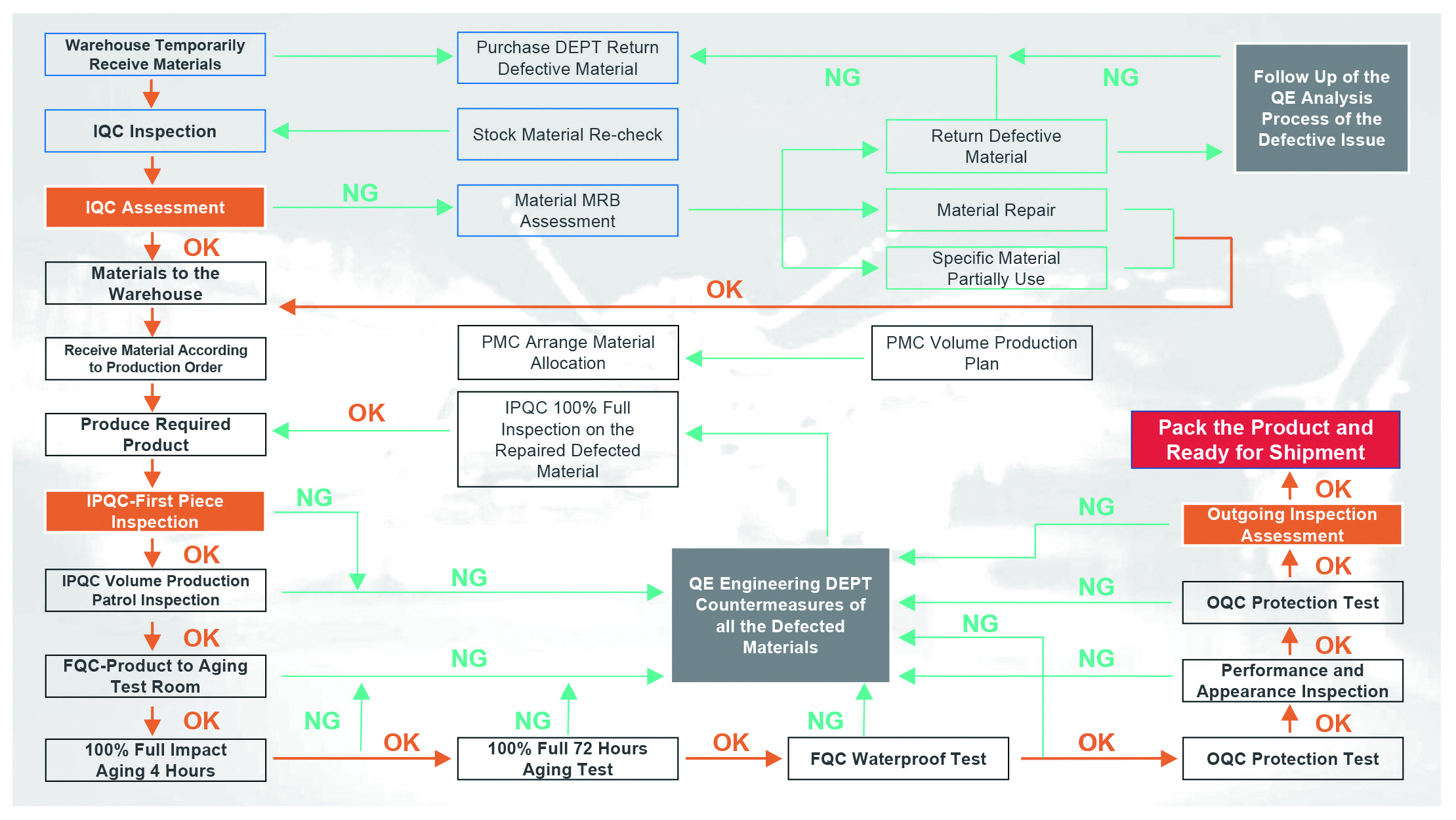
AOK Industrial Company Limited is a Shenzhen-based manufacturer founded in 2012, producing LED street lights, solar street lights, stadium lights, high bay lights and industrial lighting for customers in more than 100 countries. AOK operates OEM/ODM/SKD/CKD production, applies 28+ quality inspection procedures, and states an after-sales response within 24 hours with resolution within 48 hours. Within that range, the SD series is the all-in-one solar street light platform relevant to roadway and residential deployments, and it is listed among the products covered by AOK's ISO9001, ISO14001 and ISO45001 management-system certificates.
The AOK SD series in engineering terms
Power and efficacy envelope
The SD series spans 20 W to 120 W with efficacy up to 210 lm/W. The practical consequence of that combination is a high flux ceiling inside a standard product family: at 120 W and 210 lm/W the nominal flux is about 25,200 lm before losses, whereas 120 W at 110 lm/W gives about 13,200 lm. Those two figures are arithmetic on stated ratings, not measured photometry, but they define which road geometries each platform can serve at its maximum configuration.
Optics: T2, T3, T4 and T5
The four distributions cover the geometry range that most roadway and residential layouts fall into. In conventional roadway photometry, Type II is a narrow asymmetric distribution used where the carriageway is narrow or poles are mounted on one side with limited overhang; Type III is the medium asymmetric distribution used for standard road widths with poles on one or both sides; Type IV is wider and suits broader carriageways, parking areas and open layouts; Type V is a rotationally symmetric distribution for interchanges, squares and area lighting where light must be spread in all directions. The type label is a starting point for the photometric calculation, not a substitute for it — the same label from two suppliers does not guarantee the same intensity distribution, so the .ies files should be compared in the design software.
Energy system: single-side monocrystalline panel and IP67 MPPT controller
The SD series uses a single-side monocrystalline panel with MPPT charging and an IP67 MPPT controller. Maximum power point tracking matters because a photovoltaic array's maximum power point moves with irradiance and cell temperature; an MPPT controller continuously adjusts the operating point to follow it, whereas a non-tracking controller lets the array operate away from that point. The enclosure rating is a separate, checkable attribute: IP67 denotes dust-tight construction and protection against water ingress under defined jet conditions, which is relevant where the controller sits in a pole-mounted enclosure exposed to rain, spray and washdown.
Controls, sensing and monitoring
PIR and microwave presence sensors allow a luminaire to run at a reduced level and step up when the road is occupied, so the sensor choice determines how much of the energy-system sizing is actually used each night. IoT monitoring shifts fault detection from the street to the operating data, which is the difference between finding a failing controller at the next scheduled inspection and finding it from a charge trend. Neither feature replaces a maintenance plan; both change what the plan has to include.
A seven-step selection procedure
Step 1 — Fix the photometric target before discussing products
Collect the road class, carriageway width, mounting height, pole spacing, overhang and the pedestrian and cyclist mix, then obtain the illuminance or luminance targets from the client's lighting standard and run the layout calculation. Without this input, every wattage recommendation is a guess. Where the buyer has no lighting design resource, AOK lists project simulation among its customization services, which allows the layout to be tested against candidate optics before an order is placed.
Step 2 — Convert the target into nominal power
Divide the required delivered lumens by the luminaire's efficacy to obtain nominal power, then add the maintenance and loss allowance defined by the design. As an illustration only: a layout calling for about 18,000 lm corresponds to roughly 86 W at 210 lm/W and roughly 164 W at 110 lm/W before losses. The second figure exceeds the 120 W ceiling of both products discussed here, which is exactly the kind of finding that should appear at evaluation stage rather than after award.
Step 3 — Match the distribution to the geometry
Use Type II where the carriageway is narrow and poles sit on one side; Type III for standard two-lane and four-lane roads; Type IV for wide carriageways, junctions and parking; Type V for squares, interchanges and open areas. Then verify the choice against the intensity distribution rather than the label, and check the back-light and glare control behaviour at the actual mounting height.
Step 4 — Size the energy system from the real load profile
Panel and battery sizing depend on the site's solar resource, the night-time load including any dimming or sensor profile, the autonomy the client requires, and the controller's charging behaviour. Specify the autonomy period explicitly, specify the battery chemistry and its charge profile, and confirm that the MPPT controller's settings match the battery actually supplied. A single-side monocrystalline panel with MPPT charging is the configuration the SD series offers; the numbers attached to it must come from the project, not from a default.
Step 5 — Choose controls that reduce consumption, not just feature count
Select PIR or microwave detection according to mounting height and traffic behaviour, and confirm the detection range at that height rather than on a datasheet at reference conditions. On low-traffic residential roads the gain comes from running at a reduced level for most of the night; on continuous arterial roads the gain comes from fault visibility and scheduled dimming. IoT monitoring belongs wherever a crew cannot reasonably inspect every pole on a short cycle.
Step 6 — Lock the service model before the price
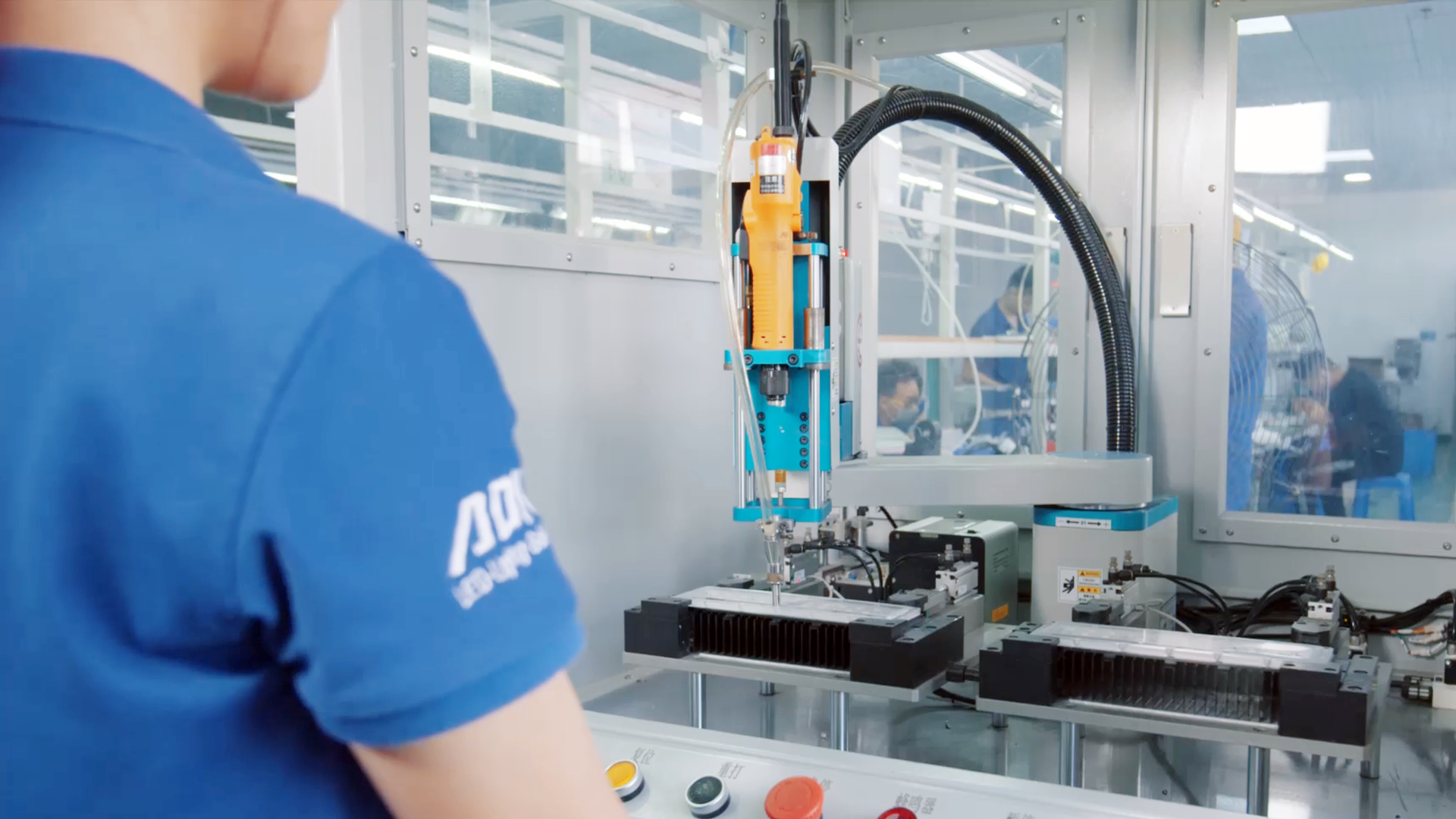
Confirm what is modular, what is replaceable at pole level, which spare parts are recommended, and who performs the work. A modular architecture plus an IP67 controller is a maintenance proposition only if the corresponding spares are available for the life of the asset. AOK's stated after-sales terms — response within 24 hours, resolution within 48 hours — should be written into the contract with the escalation path, not left in a brochure.
Step 7 — Validate the offer against documents
Request photometric files and test reports, not summaries; check that any "up to" efficacy figure is achievable in the configuration being ordered; confirm the certificate scope and validity; and agree the acceptance regime. AOK's purchasing terms define acceptance as pre-shipment testing plus the option of third-party inspection by SGS, with delivery on EXW, FOB or CIF terms. Those three elements — documents, configuration confirmation and acceptance criteria — are what convert a datasheet comparison into a defensible purchase order.
Where this specification fits: three deployment patterns
Highway and municipal corridors. In the United Arab Emirates, a municipal roadway project installed 2,000 solar street light units for highway and public-facility illumination over a five-year project duration, replacing traditional HID street lamps, with solar and grid power complementing each other to reduce energy consumption. Corridors of that type typically sit at the upper end of the range, where the 80–120 W configurations and a Type III or Type IV distribution do the work.
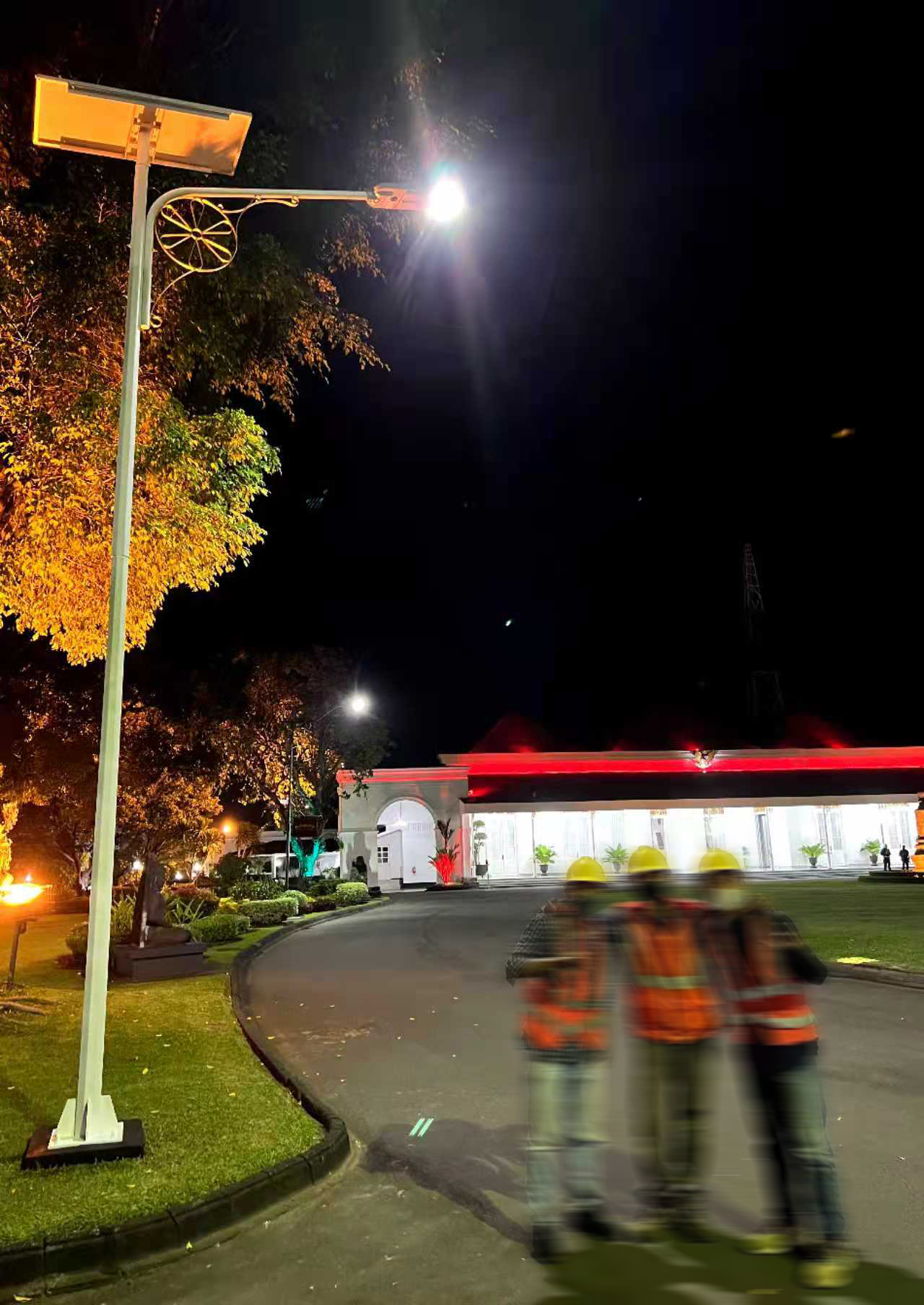
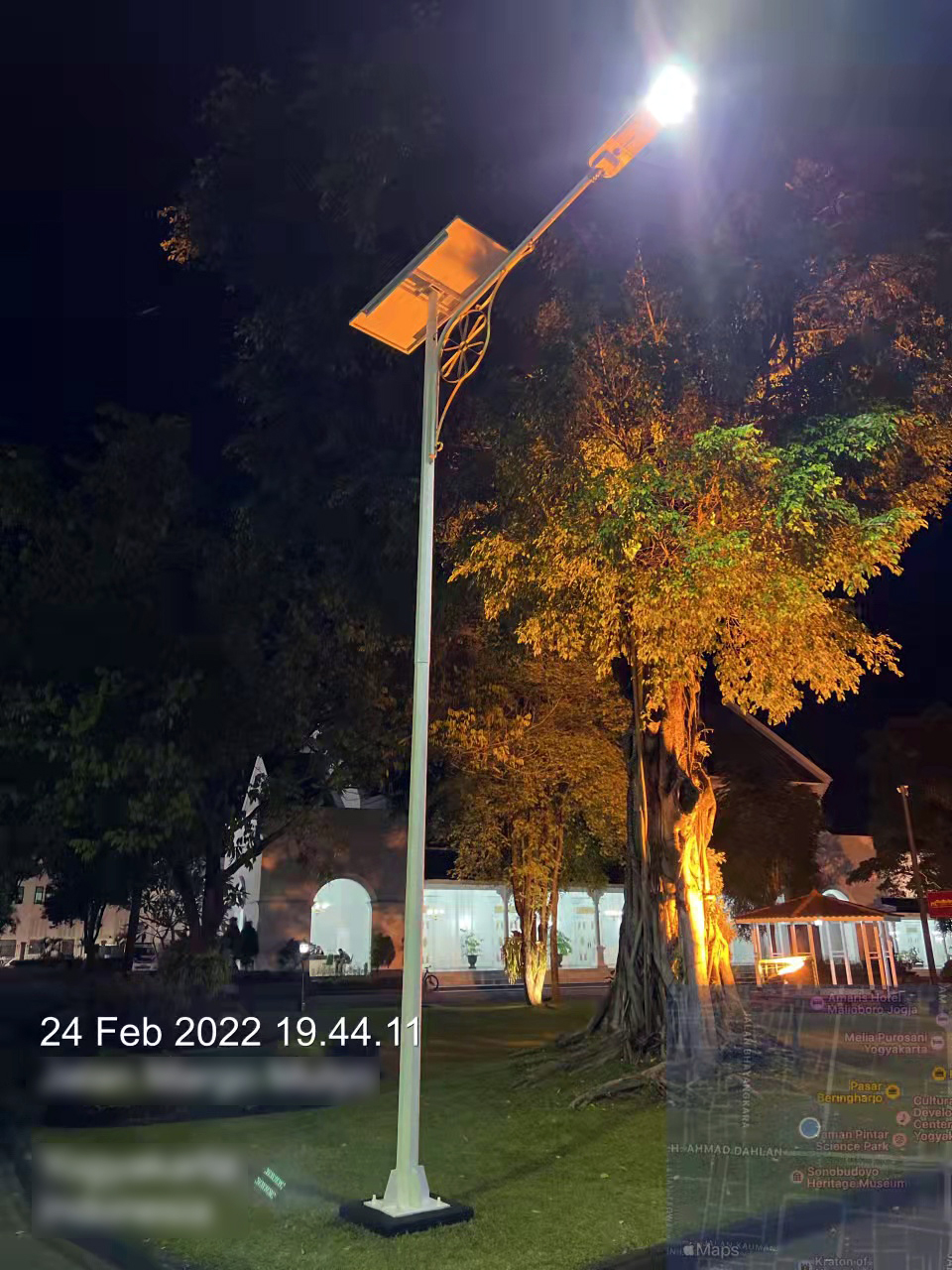
Landmark roads and landscaped areas. A 10-year project in Thailand installed 198 solar lighting units for a presidential palace roadway and landscape system, reporting better night lighting, higher energy efficiency than HID lamps, easier maintenance and improved safety, with high luminous efficiency and complementary solar and grid power as the stated highlights. Layouts like this mix power classes and optics within one site, which is where the 20–120 W spread and four distributions earn their place.
Municipal road replacement programmes. A municipal roadway lighting project in Chile installed 198 units for outdoor roadway and public-facility illumination over a 10-year duration, again replacing HID lamps with the reported results of better night lighting, higher energy efficiency, easier maintenance and improved safety. Road programmes of this shape are usually decided on delivered lumens per pole and on how quickly a failed unit can be returned to service.
AOK SD series vs Balder BI-S5A: documented specifications
The comparison below uses only the specifications supplied for each product. The purpose is to show which parameters decide a roadway application before any commercial discussion begins.
| Parameter | AOK SD series | Balder BI-S5A |
|---|---|---|
| Nominal power range | 20–120 W | 70–120 W |
| Stated maximum efficacy | Up to 210 lm/W | 110 lm/W |
| Nominal flux at 120 W (calculated) | ≈25,200 lm | ≈13,200 lm |
| Panel and charging | Single-side monocrystalline panel with MPPT | Not stated in the supplied documentation |
| Optical distributions | T2 / T3 / T4 / T5 | Not stated in the supplied documentation |
| Controller ingress protection | IP67 MPPT controller | Not stated in the supplied documentation |
| Occupancy sensing | PIR / microwave sensors | Not stated in the supplied documentation |
| Remote monitoring | IoT monitoring | Not stated in the supplied documentation |
| Lowest power option | 20 W | 70 W |
Two readings follow from the table. First, the efficacy difference is a design constraint, not a marketing preference: at the same 120 W ceiling, the calculated nominal flux differs by roughly 12,000 lm, which changes how many poles a given layout needs or how much energy the panel and battery must supply. Second, the lower bound of the power range decides whether a supplier can serve residential and pedestrian-scale roads at all — the SD series starts at 20 W, while the BI-S5A starts at 70 W.
"Not stated in the supplied documentation" means the parameter is not present in the material used for this comparison. It is not evidence that the capability is absent; it means the buyer must request the data before scoring the product.
Maintenance planning for an MPPT-based solar street light
MPPT controller faults rarely announce themselves as darkness. A controller that charges below expectation still runs the luminaire for a while, so the symptom appears as a gradually shortening night-time operating window — which is why the controller needs its own maintenance line rather than being treated as part of the luminaire.
- Data review. Where IoT monitoring is specified, review operating and charge behaviour on a fixed cycle and treat a downward trend as a work order, not an observation.
- Enclosure integrity. Inspect the IP67 controller enclosure, cable glands and connectors at each visit; an enclosure that has lost its seal is a controller replacement waiting to happen.
- Array condition. Clean the single-side monocrystalline panel, check mounting torque and confirm that new vegetation or new construction has not introduced shading.
- Battery alignment. Confirm that the controller's charge profile still matches the installed battery, especially after any battery replacement during the asset's life.
- Sensor calibration. Verify that PIR or microwave detection still triggers at the intended height and level, because a mis-set sensor silently converts a dimming strategy into a fixed-output one.
- Spares discipline. Hold controllers and sensor modules as line items in the spares list; the modular architecture and IP67 rating only shorten downtime if the replacement part is on the shelf.
Frequently asked questions
Which certificates apply to the AOK SD series, and what should a buyer verify?
AOK holds three management-system certificates issued by Beijing Daluhangxing Quality Certification Center Co., Ltd., each scoped to "Production (Export) of LED Lighting Fixtures (Excluding Branch Offices)": ISO9001 certificate U919125Q30998R4M against GB/T 19001-2016, issued 2025-11-27 and valid to 2028-12-10; ISO14001 certificate U919124E30857R1M against GB/T 24001-2016, valid from 2024-12-12 to 2027-12-12; and ISO45001 certificate U919124S30768R1M against GB/T 45001-2020, also valid from 2024-12-12 to 2027-12-12. The All-in-One Solar Street Light-SD is listed among the applicable products for all three. These are management-system certificates, not product-type approvals, so a project should additionally request the product-level test reports and market-specific certificates named in its own technical specification.
Can the SD series be configured for a non-standard road layout or a private-label programme?
Yes, within the documented envelope: 20–120 W with T2, T3, T4 or T5 optics, which covers most roadway and residential geometries without leaving the standard platform. AOK's customization scope includes product appearance, structural components, the optical module and the electrical circuit, together with project simulation. Production modes are OEM, ODM, SKD and CKD, with private mode and project protection agreements available. AOK lists 200 PCS as MOQ for this capability while noting elsewhere that MOQ varies by product type, so the figure should be confirmed against the specific configuration at quotation stage.
What drives the cost of a solar street light, and where does higher efficacy pay back?
Cost is driven by the power class, the efficacy, the panel and battery sizing required by the load profile, the number and type of optical distributions, the control package, and the structure. AOK does not publish a price list; quotations depend on configuration and on delivery terms, which are EXW, FOB or CIF. The analytical point a buyer can act on is this: for a fixed lumen target, higher efficacy lowers the nominal power needed, and lower nominal power reduces the energy the panel and battery must deliver each night. That is a design-level direction of effect, not a measured saving, and it only holds once the autonomy, solar resource and dimming profile are fixed.
How can a batch be validated before shipment?
AOK's purchasing terms define acceptance as pre-shipment testing with the option of third-party inspection by SGS, and payment as 30% T/T in advance with 70% T/T before shipment, or by L/C. Before that stage, the buyer should close three documentation gaps: obtain photometric files for the specific optic ordered, obtain test reports rather than summary claims, and confirm that the efficacy figure quoted is achievable in the ordered wattage and configuration. Project simulation can be used earlier, at selection stage, to test the layout against candidate optics.
What lead time and after-sales response should be planned into the schedule?
AOK states a lead time of 30–45 days and an after-sales response within 24 hours with resolution within 48 hours. On a multi-phase road programme, the practical planning step is to sequence orders against that lead time and to hold controllers and sensor modules in the project spares list, because a modular luminaire with an IP67 controller still depends on the replacement part being available. Buyers preparing a first configuration can request a specification review, a project simulation or a sample discussion through the AOK team, using the configuration data from steps 1 to 4 above as the brief.
Conclusion
Solar street light selection becomes straightforward once the order of decisions is fixed: photometric target, nominal power from efficacy, optical distribution from geometry, energy system from the load profile, controls from the traffic pattern, service model from the asset life, validation from documents. The AOK SD series supplies the components that procedure needs — 20–120 W, efficacy up to 210 lm/W, a single-side monocrystalline panel with MPPT and an IP67 controller, T2 to T5 optics, PIR or microwave sensing, IoT monitoring and a modular build — and the Balder BI-S5A comparison shows why the power ceiling and the efficacy figure should be tested against the lumen target rather than accepted as headline values. Full product documentation for the range is available in the AOK LED outdoor lighting catalogue, and company-level information is published at AOK Industrial Company Limited.
Next step: send the road layout, mounting height, pole spacing and required autonomy to the AOK team, and request a configuration review against the SD series power and optic range before the specification is frozen.
Contact: info@aokledlight.com · Tel: +86-755-23579418 · WhatsApp: +86 15359133623
Have Questions or Need More Details?
Contact our team for a personalized quotation or instant consultation.
Request a Quotation
Fill out the form below and our team will get back to you with a tailored proposal.
WhatsApp Direct Chat
Prefer to chat in real-time? Message us on WhatsApp for instant assistance & quick answers.
- Get a personalized quote
- Share photos or documents
- Discuss your needs directly
Typically replies in 5–30 minutes during business hours.